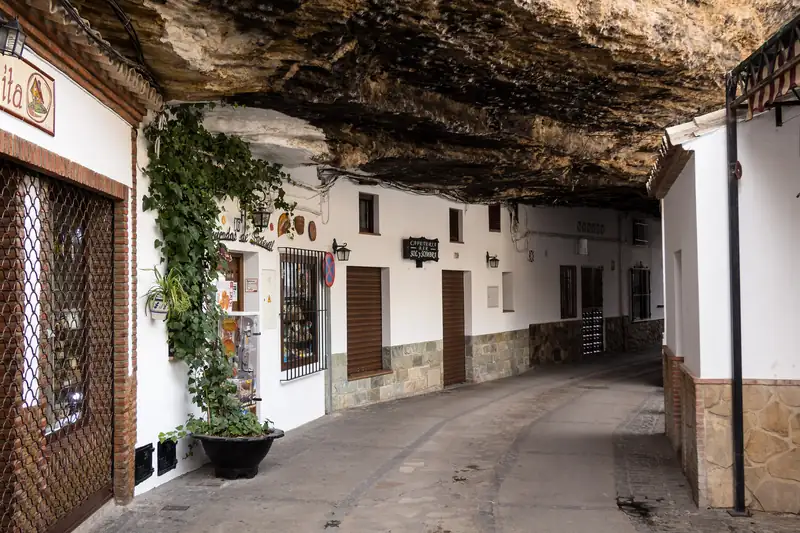
Cuevas del Sol and Cuevas de la Sombra
The two famous streets. Cuevas del Sol faces south, catches the most light and is lined with cave bars and tapas terraces. On Cuevas de la Sombra the overhang covers the street like a roof.
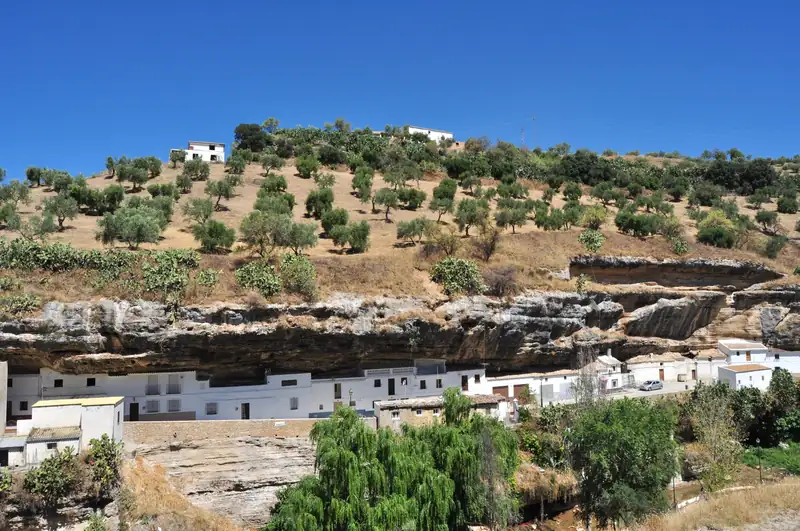
The white village in the Sierra de Cádiz where houses sit under, inside and on top of the rock.
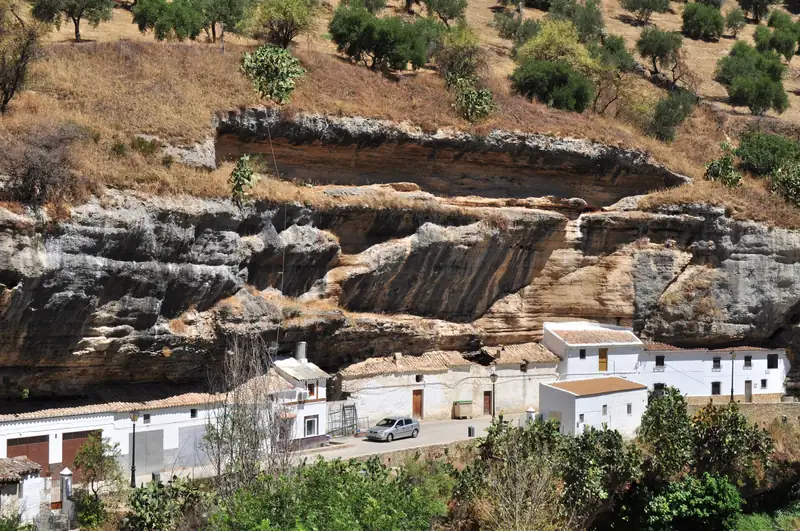
Setenil de las Bodegas is a white village in the Sierra de Cádiz, Andalusia, about 19 km from Ronda. Its houses are built into the cliffs of the Río Trejo gorge, so on its best-known streets, Cuevas del Sol and Cuevas de la Sombra, the rock is the roof. Most visitors come on a day trip from Málaga or Seville.
Rock shelters, a Moorish fortress, a siege that ended in 1484, and a name nobody can quite explain.
Prehistory
People have used the hollows under these cliffs since prehistory. A small figurine found in Calle Calcetas in 1997, the Damita de Setenil, is about 5,000 years old.
Al-Andalus
The Almohads began a fortress on the crag, and the Nasrid kingdom of Granada held it until 1484. A Castilian army camped below it for about 20 days in October 1407 and left without taking it.
1484
Ferdinand and Isabella’s army took Setenil in September 1484, after cannon fire directed by the Marquis of Cádiz broke the walls. The defenders were allowed to leave for Ronda. The town still marks 21 September.
The name
Tradition says “Setenil” comes from the Latin septem nihil, seven times nothing, for seven failed sieges. Historians doubt it, and the real origin is unknown. “De las Bodegas” comes from the wineries that followed the Christian settlers’ vineyards.
English speakers often write the name as “Sentinel de las Bodegas”. It has nothing to do with sentries: the name is Setenil, from that disputed seven-sieges story.
The old town is small. In a few hours you can walk the cave streets, see the keep and the church, and climb to a viewpoint.
The two famous streets. Cuevas del Sol faces south, catches the most light and is lined with cave bars and tapas terraces. On Cuevas de la Sombra the overhang covers the street like a roof.
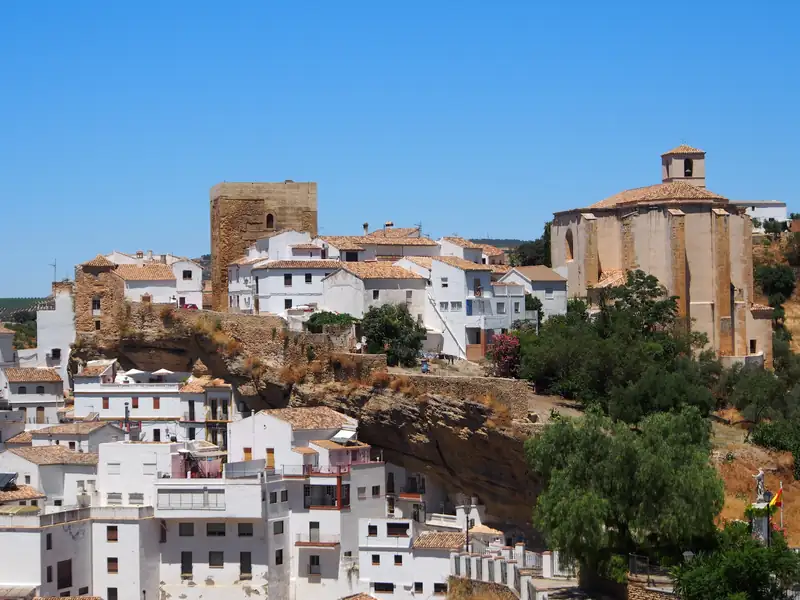
The Torreón, the surviving tower of the fortress, has three floors used for exhibitions. Just below it, the aljibe stored rainwater for the garrison under brick arches. Opening hours and any entry fee are not published officially, so ask at the tourist office.
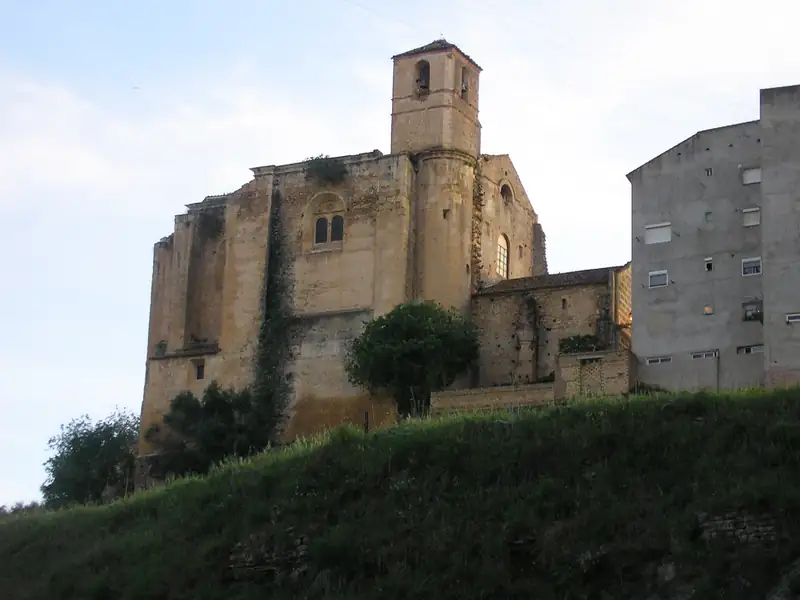
Built over the main mosque after the conquest and not finished until 1614, so Mudéjar, Gothic and Renaissance work sit side by side. Inside is the Retablo de la Anunciación, painted in the late 15th century.
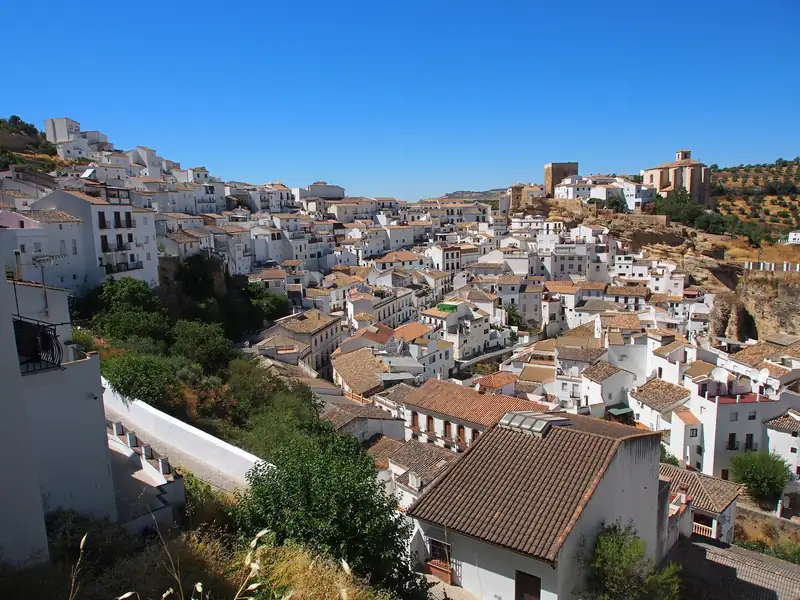
The Mirador del Carmen, on the rock beside the Ermita del Carmen, looks across the white houses to the keep and the church. It is a climb up steps. The town map from the tourist office marks more viewpoints.
Setenil is about 19 km from Ronda, 97 km from Málaga and 115 km from Seville. Most people drive, or come on a day tour that pairs it with Ronda.
Full guide to getting to SetenilMap of Setenil and its car parks
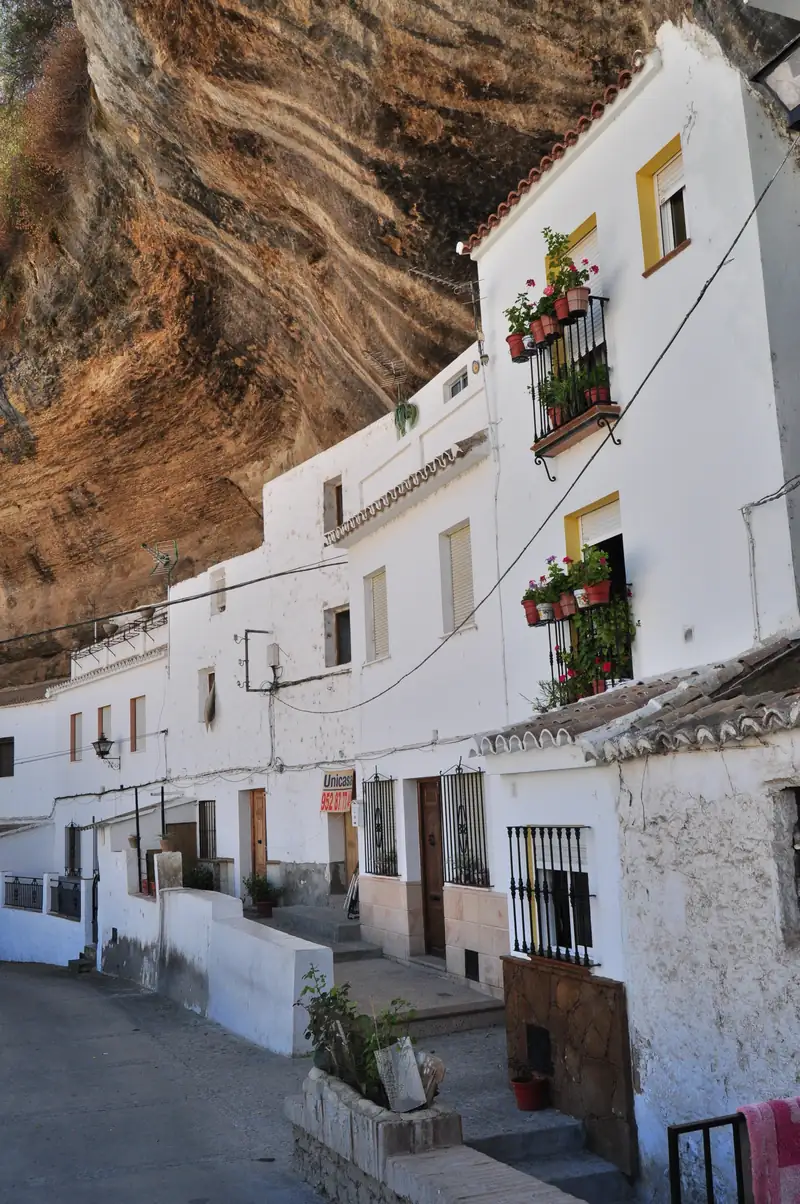
The tourist office lists about 60 places to stay in Setenil, mostly small holiday lets in the old town, and only two hotels. Sleep in the old town to have the cave streets after the day-trip coaches leave, but expect steps and no parking at the door; on the edge of the village you get a car park outside and a 10 to 20 minute walk in. Ronda, about 30 minutes away by car, has more restaurants and the bus links to Málaga and Seville.
Most tours that stop in Setenil start in Málaga or Seville and spend the bigger part of the day in Ronda. Here are 6 to start with; the tours page lists all 12, sorted by where they start.
9 hours
The most-booked Setenil day trip: about four hours in Ronda, then an hour in Setenil with the little shuttle train, plus an optional wine and cured-meat tasting in Ronda.
from$35
Check availability9 hours
Eight people in a van with hotel pickup, stopping at Zahara de la Sierra, Setenil and Ronda, with a guide at each and 75 minutes in Setenil.
from$107
Check availability10 hours
The cheapest coach from Málaga: Setenil first with 75 minutes of free time, then four free hours in Ronda, with a guided walk there as a paid extra.
from$28
Check availability10 hours
The budget coach option from Seville, with 75 minutes to wander Setenil's rock-roofed streets before an afternoon on your own in Ronda.
from$55
Check availability11 hours
The shared coach for the western Costa del Sol: a guided walk and free time in Ronda, then an hour and a half to explore Setenil.
from$77
Check availability4 hours
A morning hop from Ronda bus station: coach to Setenil, a ride round the village on the tourist train and free time before the 1pm return.
from$19
Check availabilityPrices and ratings were taken from GetYourGuide and can change. Booking through these links supports this site at no extra cost to you.
Setenil is one of the white villages of the Sierra de Cádiz. These are the easiest places to add to the same day or trip.
19 km away. The Puente Nuevo, finished in 1793, crosses the Tajo gorge about 98 m above the river. Most Setenil day tours spend the bigger part of the day here.
The Roman town called Ronda la Vieja, about 10 km away on a plateau at 999 m, with a theatre cut into the rock. Closed for now: a landslide cut its access road, the MA-7402.
15 km away. A hilltop castle that Castile took in 1327, a big neoclassical church, and the start of the Vía Verde de la Sierra, a rail trail of about 36 km.
Setenil is on the Ruta de los Pueblos Blancos. Zahara de la Sierra and Grazalema, inside the Sierra de Grazalema Natural Park, are each about 50 minutes by car.
The rock streets, the castle and its history, Roman Acinipo up the road, and how to get here.
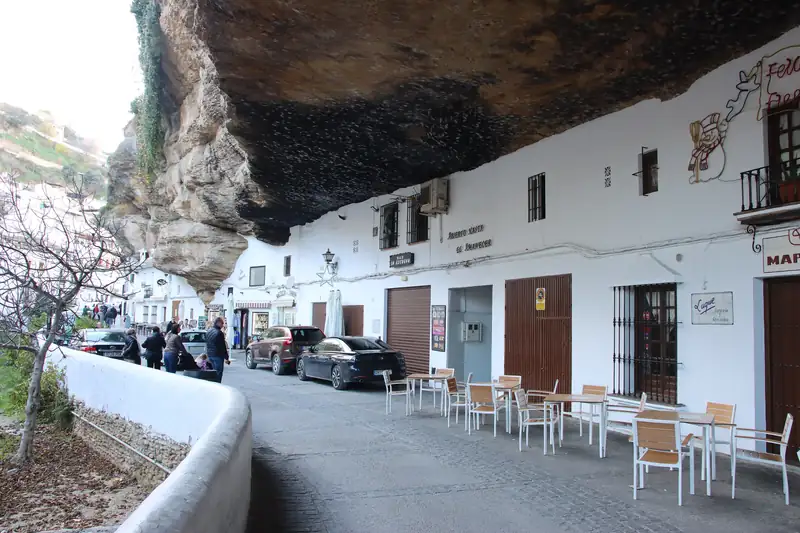
The best things to do in Setenil de las Bodegas are walking the two rock-roofed streets, Cuevas del Sol and Cuevas de la Sombra, climbing to the castle keep and the Encarnación church, and looking over the rooftops from the Carmen viewpoint.
Calle Cuevas del Sol and Calle Cuevas de la Sombra are the two streets that make Setenil de las Bodegas famous, with houses and bars set under overhangs of rock worn out by the Río Trejo.
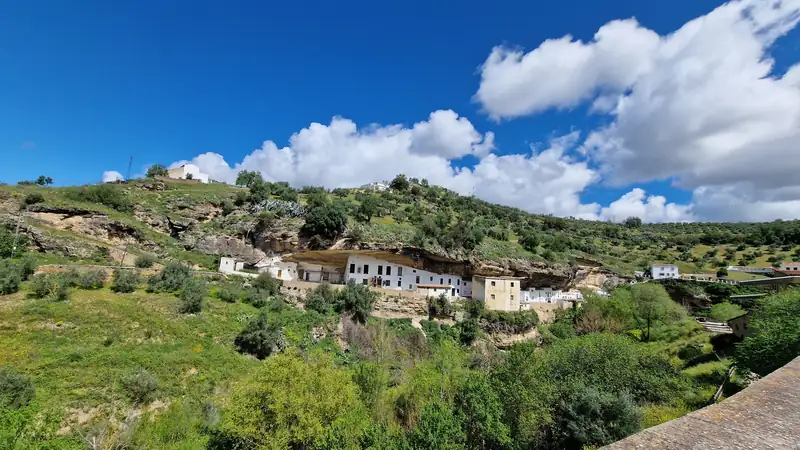
Most people reach Setenil de las Bodegas by car or on a day tour.
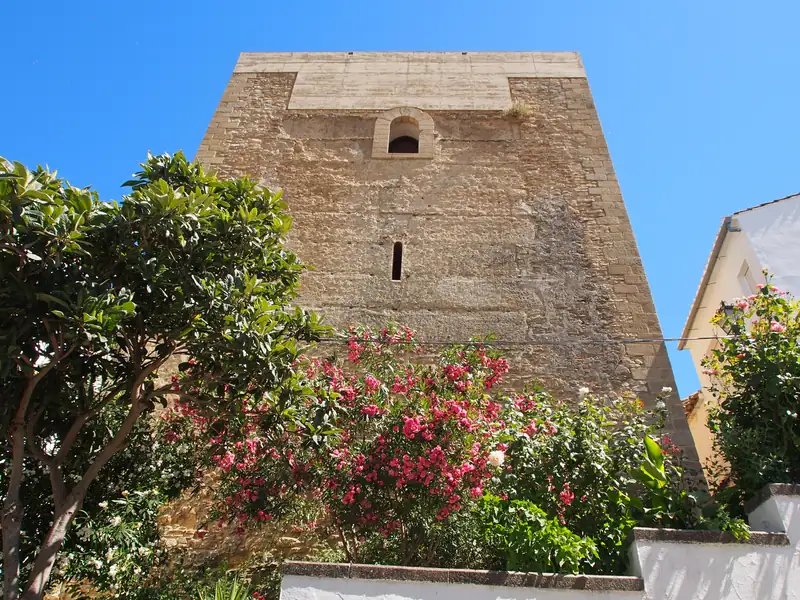
The castle of Setenil de las Bodegas is a Moorish fortress on the crag above the town, held by the Nasrid kingdom of Granada until Castilian forces under King Ferdinand took it in September 1484.
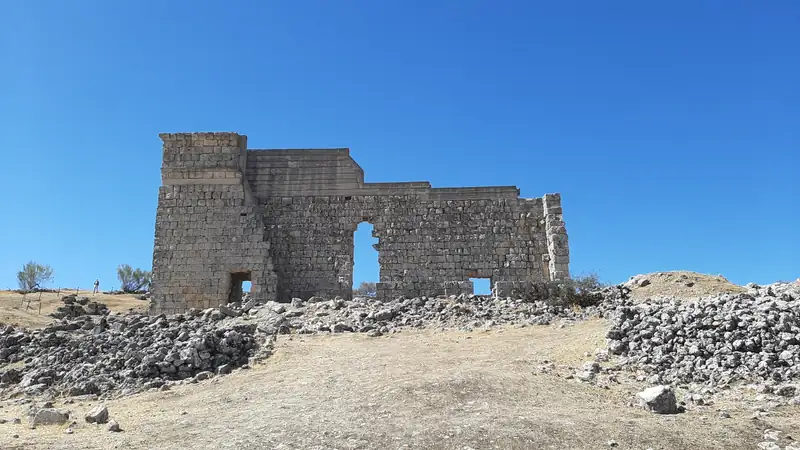
Acinipo, the ruins of a Roman town also called Ronda la Vieja, used to be free to visit but has been closed since storms in March 2025 brought down part of its access road.
Where to stay, the map, and what to sort out before you go.
Setenil has only two hotels: Hotel Villa de Setenil in the old town and El Almendral on the edge with its own car park.
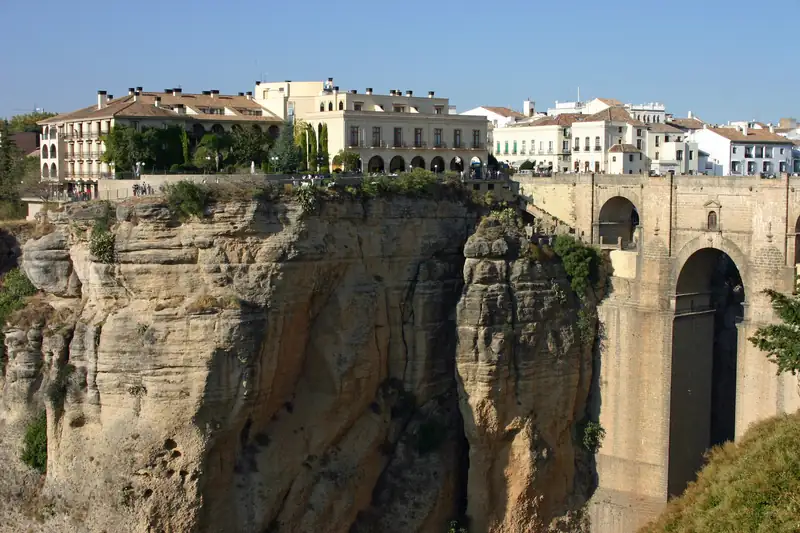
Stay in El Mercadillo, within five minutes of the Puente Nuevo, if it is your first visit or you have no car.
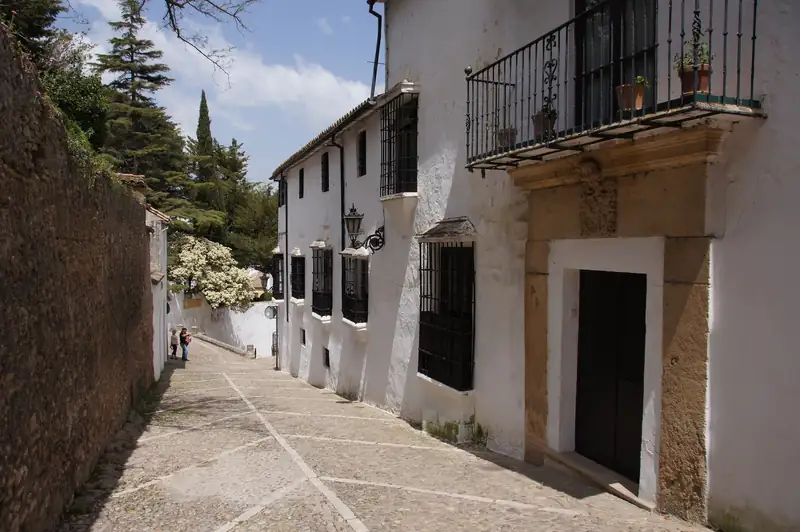
Park at Martínez Astein, the underground car park on the north side of the new town: €2 an hour, €24 a day, open 24 hours, about 15 minutes' walk from the Puente Nuevo.
Setenil de las Bodegas map: the cave streets, the castle, viewpoints and car parks on one map, with a plain list of the same places.
Ronda, the routes in from Málaga and Seville, the other white villages and the best months to come.
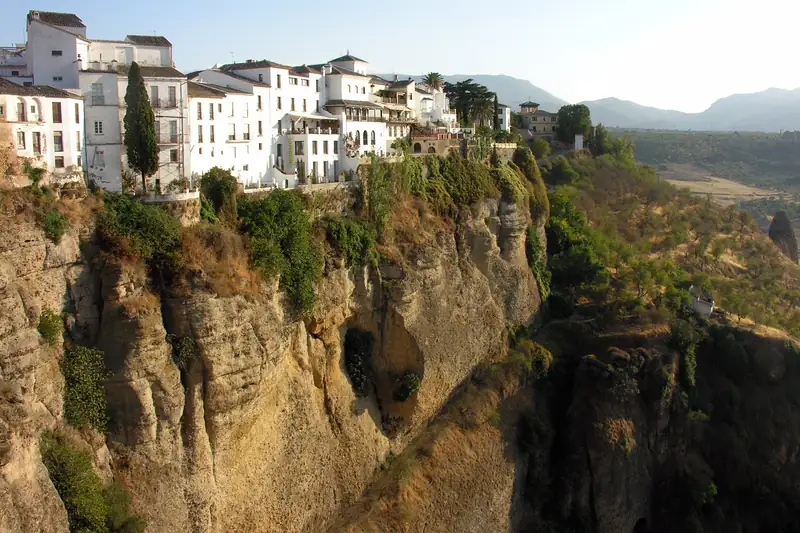
Ronda's main sight is the Puente Nuevo, the 18th-century bridge over the El Tajo gorge, which you can see from above, from inside and from below.
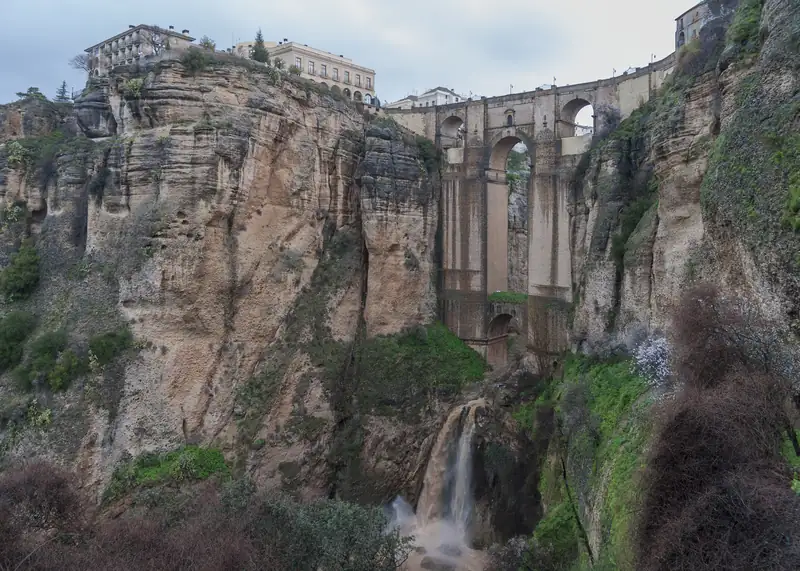
Ronda's Puente Nuevo crosses El Tajo, a gorge more than 100 metres deep, and joins the old and new halves of town.
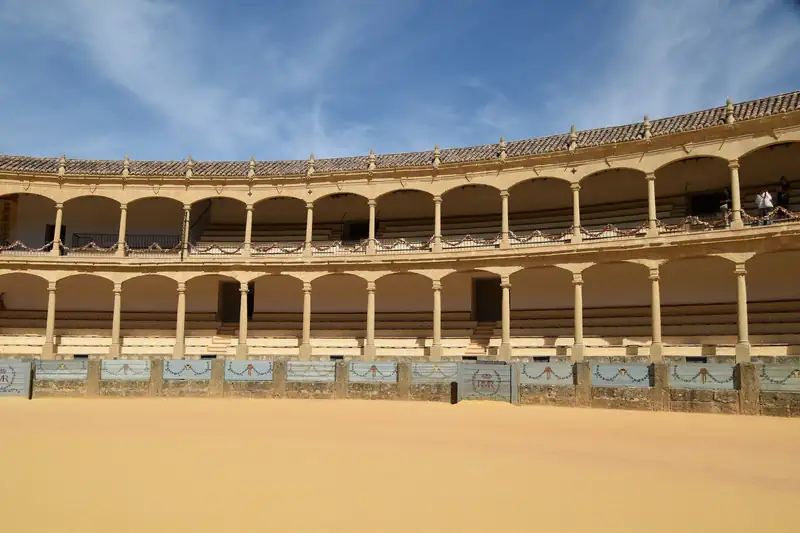
The easiest Ronda day trip from Málaga is a coach tour, and the most popular ones also stop in Setenil de las Bodegas.
Seville to Ronda is about 125 km, roughly 1 hour 45 minutes by car or two hours on the Damas bus.
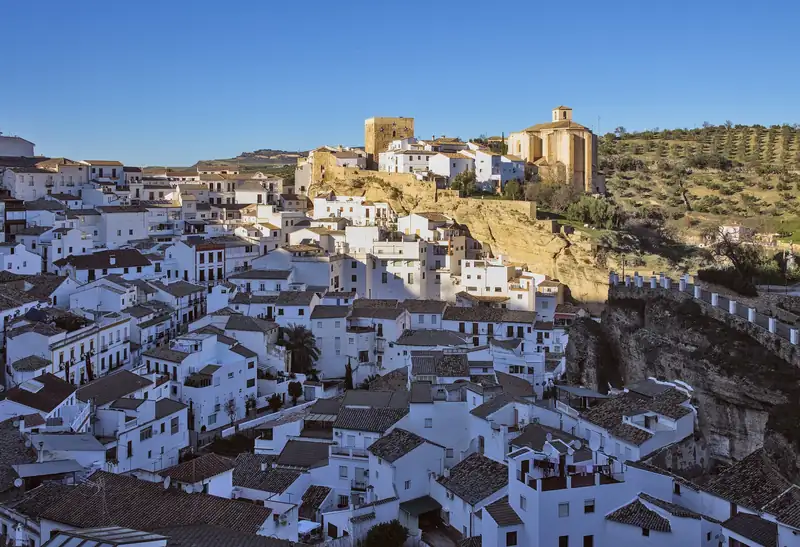
For the most memorable day trip from Seville, go to Ronda and Setenil de las Bodegas: a town on a gorge and a village built under rock, about two hours away by car or tour.
The best day trip from Málaga for most people is Ronda with Setenil de las Bodegas, about 1 hour 40 minutes inland, on a tour or by car.
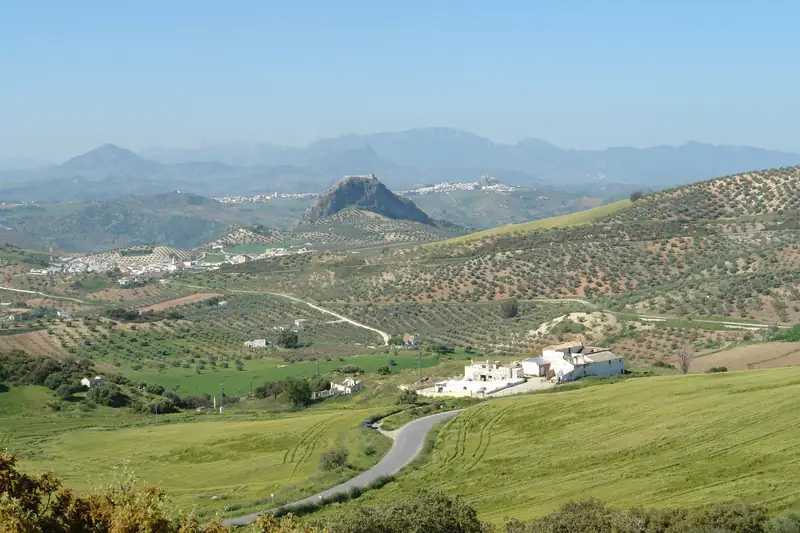
The white villages of Andalusia, or pueblos blancos, are hill towns of whitewashed houses in the mountains between Ronda, Seville and Jerez.

Olvera is a white town of about 7,800 people in the Sierra de Cádiz, 15 km from Setenil de las Bodegas.
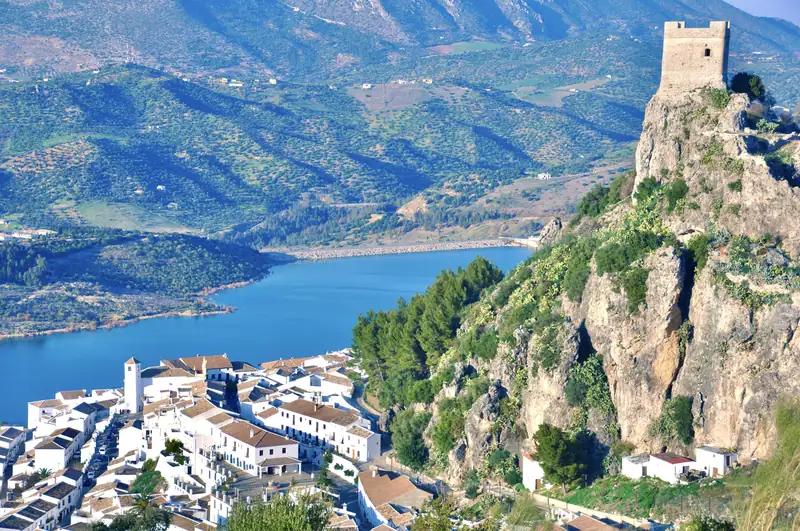
Zahara de la Sierra is a white village of about 1,300 people on a hillside inside the Sierra de Grazalema Natural Park, crowned by a 13th-century Nasrid castle and overlooking the turquoise Zahara-El Gastor reservoir.
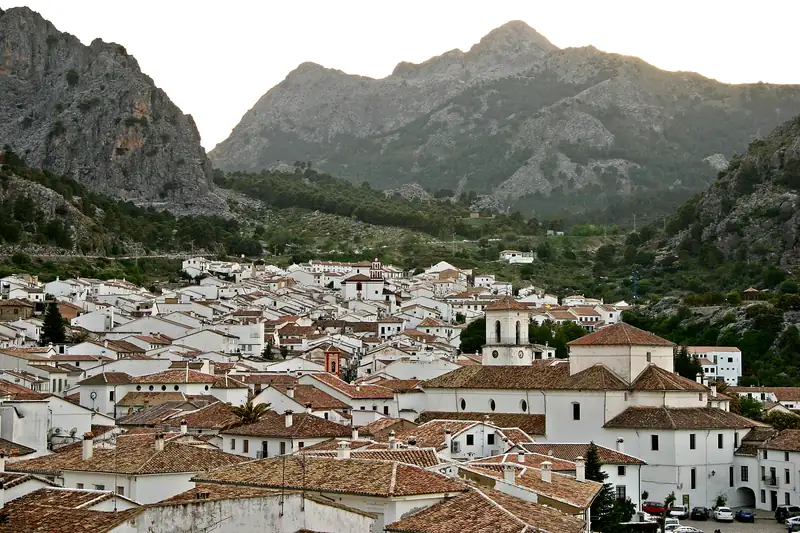
Grazalema is a mountain village of about 2,000 people inside the Sierra de Grazalema Natural Park, 31 km from Setenil.
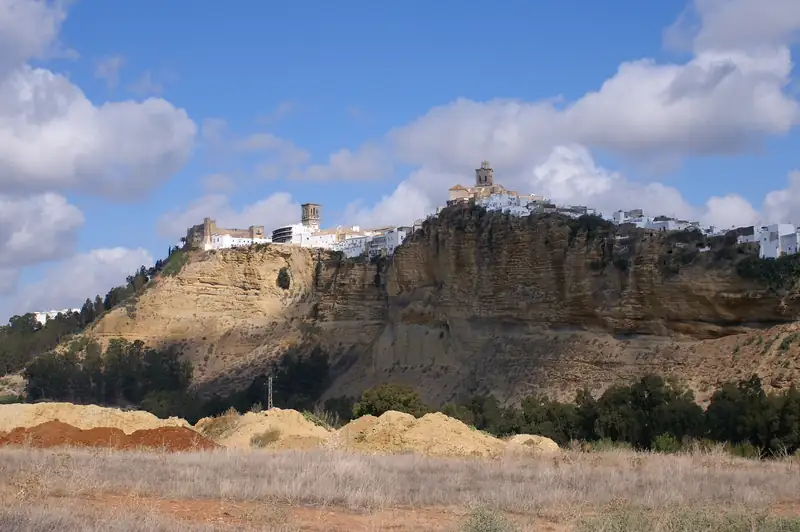
Arcos de la Frontera is a town of about 31,000 people whose old town sits on a sandstone ridge above vertical cliffs over the Río Guadalete.
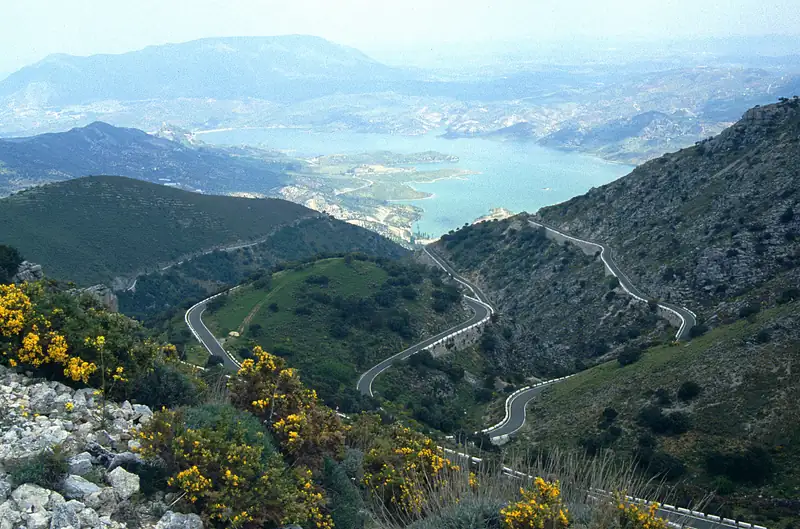
The best time to visit Ronda, Setenil and the white villages of inland Andalusia is April to May or late September to October.
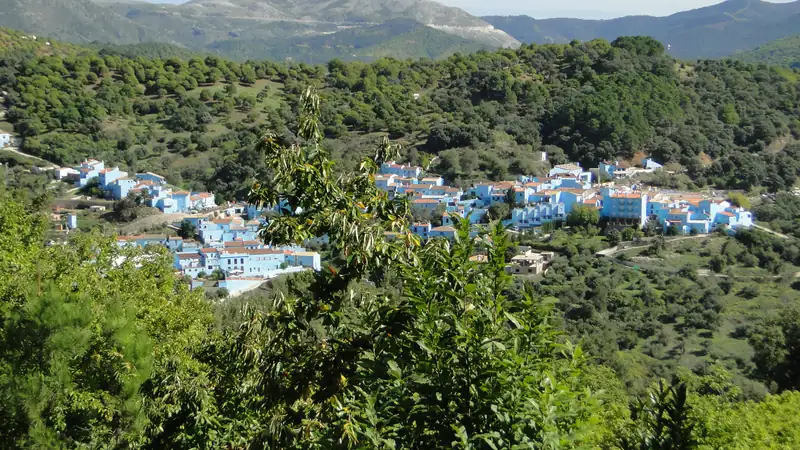
Júzcar is a village of 208 people in the Genal valley, about 21 km from Ronda, painted blue in 2011 for Sony's Spanish launch of The Smurfs 3D.
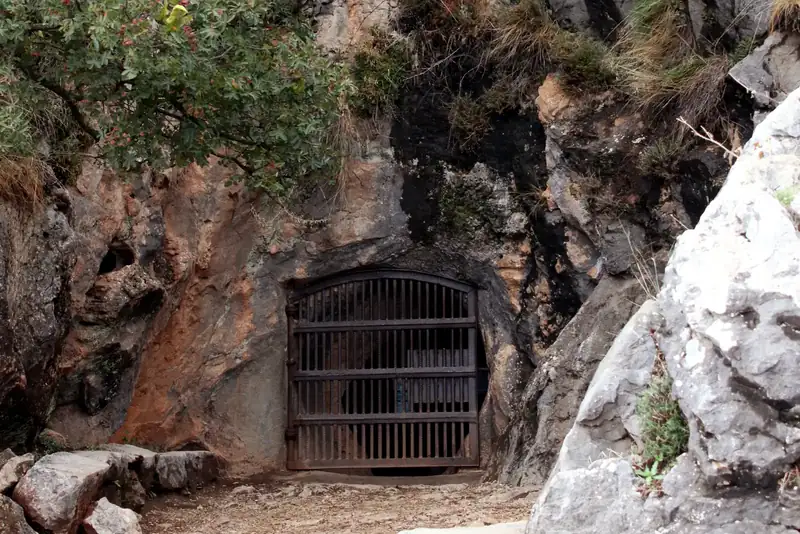
Cueva de la Pileta is a prehistoric painted cave near Benaoján, about 20 to 25 km from Ronda.
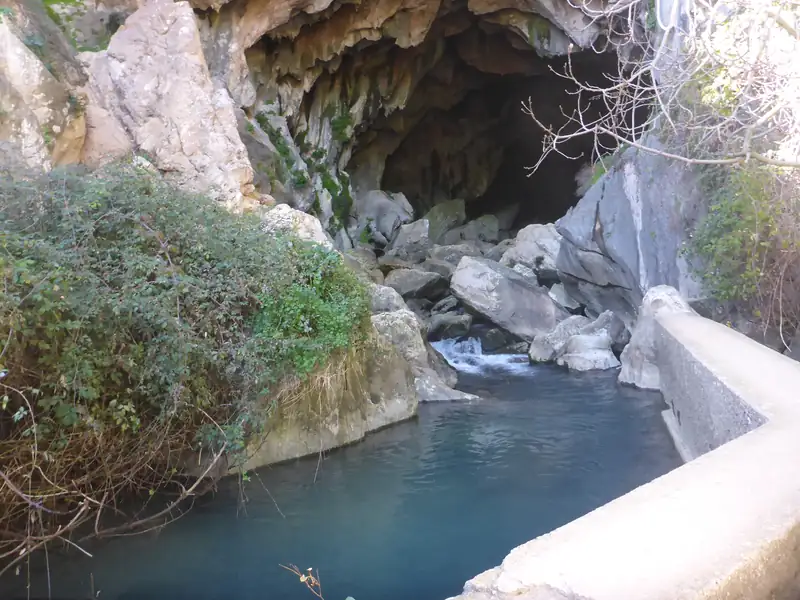
The Cueva del Gato is a cave near Benaoján, about 18 km from Ronda, where an underground river pours out of a cliff into a cold, clear pool.
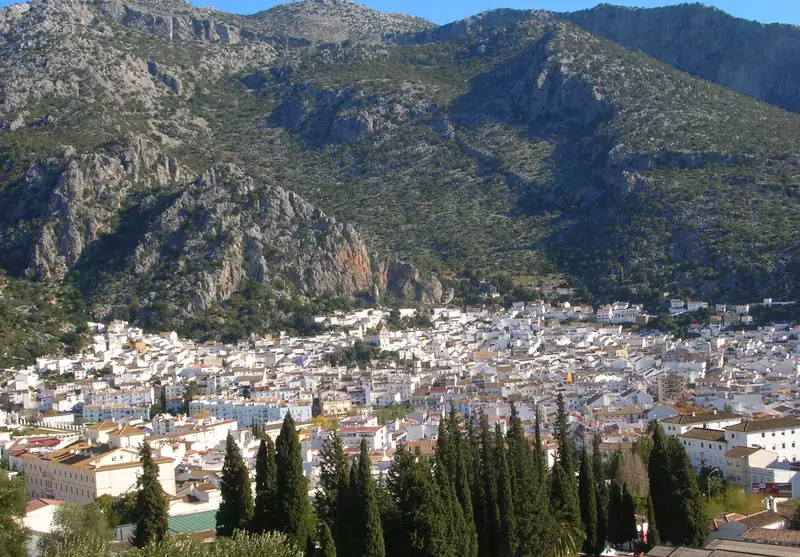
Ubrique is a white town of 16,615 people in the Sierra de Cádiz, about 55 km from Ronda, known across Spain for leather goods.
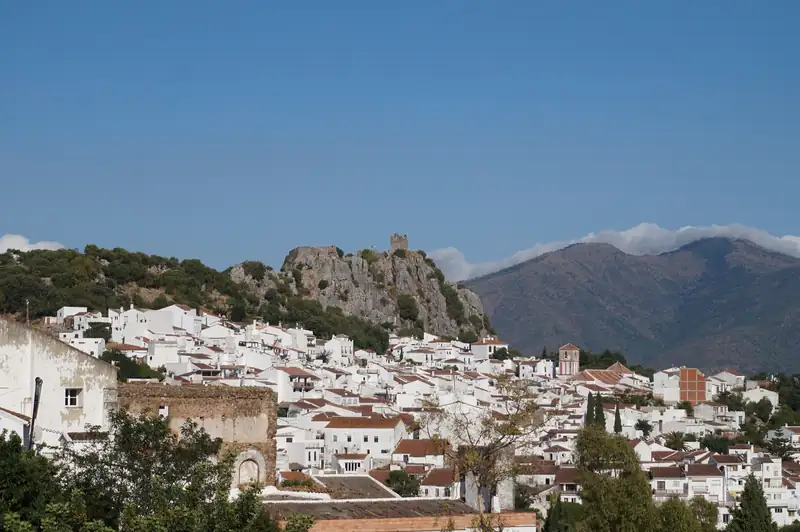
Gaucín is a white village of 1,620 people in the Serranía de Ronda, about 36 km south of Ronda on the road towards Gibraltar.
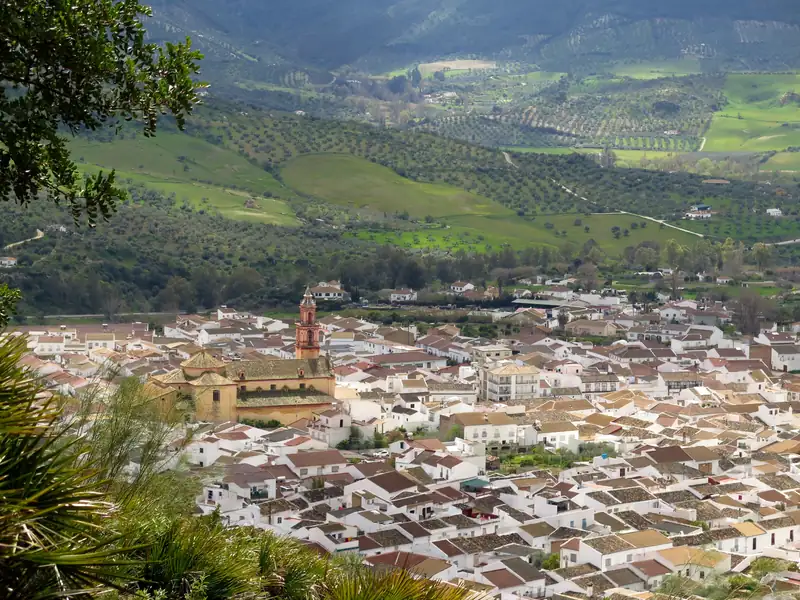
Algodonales is a white town of 5,425 people at the foot of the Sierra de Líjar, about 25 km from Setenil and 42 km from Ronda.
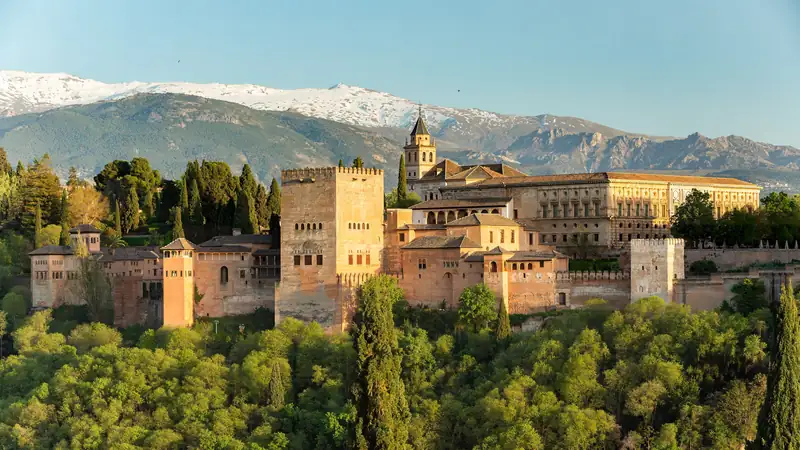
Granada to Ronda is about 180 km, and driving is the only direct way: allow 2 to 2.5 hours on the A-92 past Antequera.
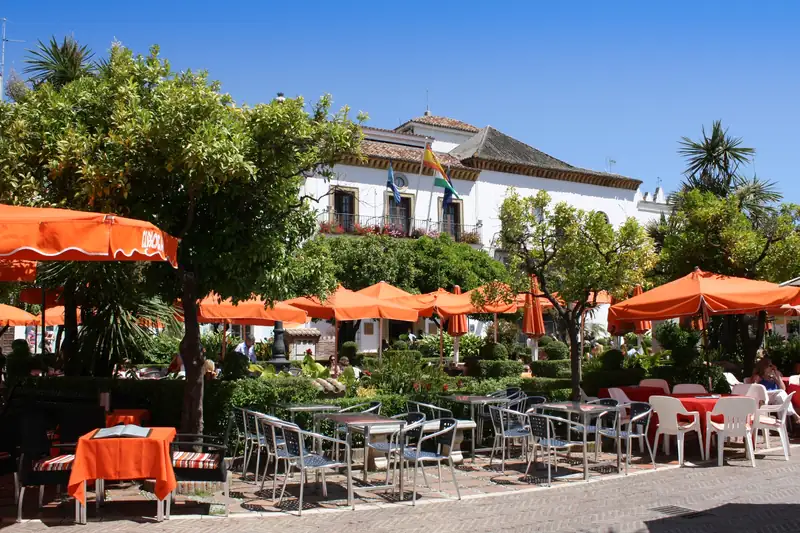
Marbella to Ronda is about 60 km, a little over an hour by car up the A-397 mountain road from San Pedro de Alcántara.
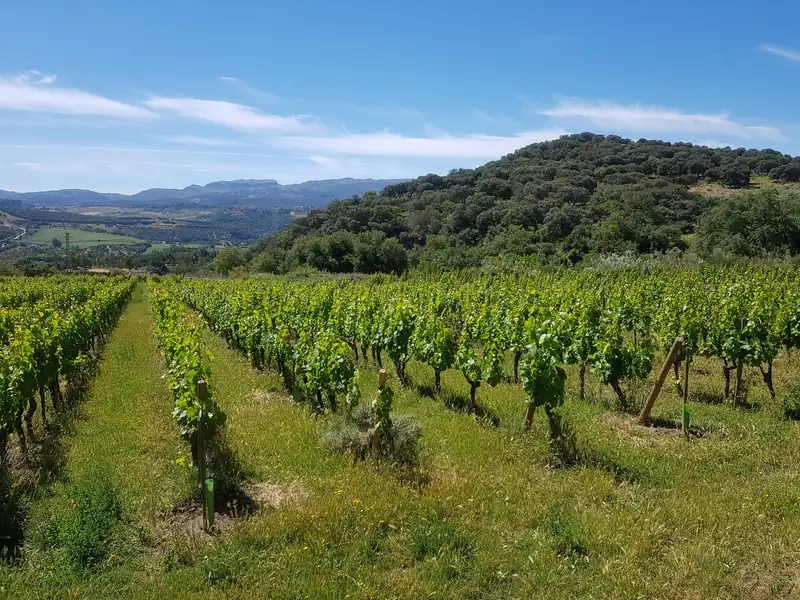
At least seven wineries around Ronda take visitors, and almost all of them need booking in advance, online or by phone.
In one of the signed car parks on the edge of town, then walk in. The tourism office lists four: Los Caños (a covered car park), the Virgen del Carmen school on Urbanización Almendral, Parque de la Granja on Calle Vicente Aleixandre, and the fairground. Don’t try to drive into the old town, where the streets are too narrow to park. No official parking fee is published, so check the signs.
Walk the two cave streets, Cuevas del Sol and Cuevas de la Sombra, where houses and bars sit under the rock. Climb to the Torreón, the keep of the Moorish fortress, see the cistern below it and the church of the Encarnación, then look over the rooftops from the Mirador del Carmen. Stop for tapas in a cave bar; sopas cortijeras is the local dish to try.
Setenil de las Bodegas, in the province of Cádiz in Andalusia. Its houses are built into the cliffs of the Río Trejo gorge, so overhanging rock forms the roof of whole streets. On Calle Cuevas de la Sombra the rock covers the street like a tunnel, which is why it gets called the town that lives under a rock.
Two to three hours covers the cave streets, the keep and a viewpoint, with time to eat. Most coach day trips stop for an hour or 75 minutes, and reviewers often say that feels rushed. If you have a car, a morning in Setenil and an afternoon in Ronda, half an hour away, makes an easy day.
A bodega is a wine cellar or winery. Setenil took “de las Bodegas” from the wineries that grew up after Christian settlers planted vines alongside the Moorish olive and almond groves. Phylloxera, which reached Andalusia in the late 19th century, wiped out the vines, though the town council says the first Setenil red wines in many years are now being made.
By car it is about 97 km, roughly an hour and 45 minutes, on the A-357 and A-367 towards Ronda. No direct public bus from Málaga is confirmed, and the railway via Ronda runs as replacement buses during track works expected to last into autumn 2027. Without a car, the simplest way is a day tour from Málaga that pairs Setenil with Ronda.