Stops in Setenil
White Towns and Ronda: Day Excursion from Seville.
9 hours
Eight people in a van with hotel pickup, stopping at Zahara de la Sierra, Setenil and Ronda, with a guide at each and 75 minutes in Setenil.
from$107
Check availability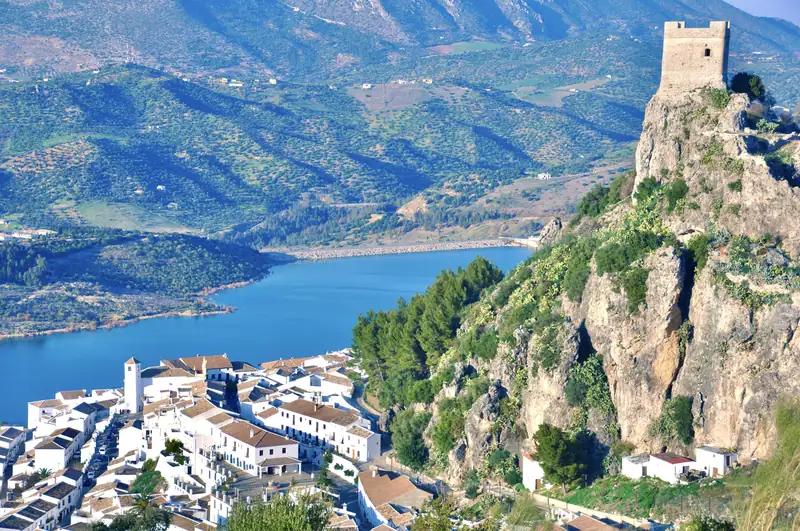
Zahara de la Sierra is a white village of about 1,300 people on a hillside inside the Sierra de Grazalema Natural Park, crowned by a 13th-century Nasrid castle and overlooking the turquoise Zahara-El Gastor reservoir. It is 32 km from Setenil and 17 km from Grazalema over the Puerto de las Palomas pass.
Zahara de la Sierra is the white village with the most dramatic setting in the Sierra de Cádiz. Houses climb a steep slope of the Sierra del Jaral to a castle keep on a rock, and below them spreads the turquoise water of the Zahara-El Gastor reservoir. It is small, 1,344 people in 2025 (INE), and it sits inside the Sierra de Grazalema Natural Park.
From Setenil de las Bodegas it is 32 km, about 50 minutes by car. Most people combine it with Grazalema, 17 km away over a high mountain pass.
The castle is Nasrid, from the 13th century, according to both Cádiz’s tourism board and Los Pueblos Más Bonitos de España. The keep on the summit, the Torre del Homenaje, was rebuilt later; the association dates it to the 13th to 15th centuries. Sources disagree on the details, so treat any single precise date with suspicion.
Zahara’s big moment in history came in 1481, when the Emirate of Granada recaptured it. That attack gave Castile the pretext for its final war against Granada. Castilian troops under Rodrigo Ponce de León took the town for good in 1483, the year before nearby Setenil fell.
The path to the keep climbs from the village through what is left of the medieval town, past stretches of wall. Los Pueblos Más Bonitos de España lists the castle as open to visitors. We could not confirm a current fee or opening times, so ask at the tourist office before you set off. The view from the top takes in the whole reservoir and the ridges of the park.
Zahara’s streets are stepped because the slope is so steep. The provincial tourism board picks out the church of Santa María de la Mesa, the chapel of San Juan de Letrán, the clock tower (Torre del Reloj) and the Puente de los Palominos. The whole old town is declared a Conjunto Histórico, a protected historic ensemble.
Food here is mountain cooking. The same tourism board names quemones de cebolla, sopas hervías and borrachos azucarados as local dishes worth trying, especially around Corpus Christi.
Zahara has belonged to Los Pueblos Más Bonitos de España since 2018, a year before Setenil joined.
The reservoir is the colour that makes Zahara’s photos. The usual road into the village crosses the dam. Cádiz’s tourism board describes it as a place for water sports, and at the Arroyomolinos recreation area there is an artificial beach where you can swim.
For the classic photo of village, castle and water together, stop on the approach road before you climb into town.
The reservoir shares its name with El Gastor, a village of 1,675 people (INE, 2025) about 20 km from Zahara by road and 19 km from Setenil. Cádiz’s tourism board calls it the Balcony of the White Towns, for the view from its highest point over the villages around it. It sits on a hill near the source of the Río Guadalete, and the board points to the church of San José, a Museum of Traditions and Customs and the prehistoric dolmens near Algarín, El Charcón and Los Algarrobales.
Walkers can link the two villages on a waymarked path the tourism board lists as 5.7 km, about two hours, of medium difficulty. El Gastor is inside the Sierra de Grazalema Biosphere Reserve, like Zahara.
The CA-9104 from Zahara to Grazalema is the drive people remember. From Zahara the road climbs in tight, steep bends to the Puerto de las Palomas, a pass at about 1,190 m on the Junta de Andalucía’s trail maps. There is a viewpoint at the top, then the road drops into Grazalema. It is about 17 km in total. Allow at least half an hour without stops.
Road status in 2026. The winter storms of early 2026 damaged the CA-9104. The Diputación de Cádiz, the provincial council, reopened it on 29 June 2026 after emergency works between kilometres 1 and 2, with temporary barriers in place until permanent ones are fitted. Check the latest before you drive it, especially after heavy rain.
If you are driving the white villages loop from Ronda, this is the leg between Zahara and Grazalema. Our white villages route sets out the full day.
The trailhead for the Garganta Verde, a narrow gorge, is near the Puerto de las Palomas road. The walk descends to the Cueva de la Ermita, a cave whose vaulted roof looks like a church dome, and the cliffs hold an important colony of griffon vultures, according to Cádiz’s tourism board.
It is a restricted trail inside the park’s reserve area, and you need an authorisation from the Junta de Andalucía. The Junta’s Ventana del Visitante page lists it as 2.4 km one way, about 1 hour 30, high difficulty. Two rules matter for planning:
Dogs are not allowed. The Grazalema guide explains how to apply for this and the other permit trails.
Two hours is enough for the village, the castle walk and a drink with a view of the water. Add an hour for a swim at Arroyomolinos or the drive over the pass.
Zahara and Setenil make a natural pair, 32 km apart, and they could not look more different. Zahara shows itself from miles away, a white slope under a keep. Setenil hides in a river gorge, with its houses built under the rock. The small-group tours from Seville stop in both, giving you 45 to 50 minutes in Zahara and 70 to 75 in Setenil before an afternoon in Ronda. Our top pick takes eight people in a van with hotel pickup and a guide at each stop, which saves you the mountain driving.
Driving yourself, the most relaxed order is Setenil first, early, before the coaches reach its rock streets, then lunch in Zahara and the pass to Grazalema in the afternoon. Our guide to the rock streets of Setenil explains what you will see there.
Zahara’s Corpus Christi festival is the big event of the year. Cádiz’s tourism board says it is declared of National Tourist Interest and singles out the careful decoration of the streets. It falls on the Thursday of Corpus, in late May or June.
By car, Zahara is 32 km from Setenil, about 29 km from Olvera, about 34 km from Ronda and about 56 km from Arcos de la Frontera.
Without a car, day tours are the way. Two small-group trips from Seville stop in Zahara, then Setenil, then Ronda, giving you 45 to 50 minutes in Zahara. Another Seville tour visits Zahara and Grazalema but not Setenil. See day trips from Seville for how they compare, or the full list of tours.
9 hours
Eight people in a van with hotel pickup, stopping at Zahara de la Sierra, Setenil and Ronda, with a guide at each and 75 minutes in Setenil.
from$107
Check availability9 hours
A small-group minibus that fits down the narrow lanes of Zahara and Setenil, with guided stops in both before a longer afternoon in Ronda.
from$107
Check availability10 hours
A Sierra de Grazalema loop from Seville through Zahara and Grazalema, with an olive oil mill visit and an afternoon in Ronda, but no Setenil stop.
from$89
Check availabilityPrices and ratings were taken from GetYourGuide and can change. Booking through these links supports this site at no extra cost to you.
Yes. It gives you the classic Sierra de Cádiz view: a castle keep on a rock, white houses down the slope and a turquoise reservoir below. It belongs to Los Pueblos Más Bonitos de España. Two hours covers the village and the walk up to the keep, and the drive on to Grazalema over the Puerto de las Palomas is a highlight in itself.
Yes. Los Pueblos Más Bonitos de España lists the Nasrid castle as open to visitors. You reach it on foot from the village, climbing past the remains of the medieval town and its walls to the keep, which looks over the reservoir. We could not confirm a current fee or opening hours, so ask at the tourist office in the village before you climb.
Take the CA-9104, which climbs from Zahara over the Puerto de las Palomas, a pass at about 1,190 m, and drops into Grazalema. It is about 17 km of tight bends, so allow at least half an hour. Winter storms damaged the road in early 2026, and Cádiz's provincial council reopened it in June 2026 after emergency repairs. Check its status before setting off.
Yes, at a designated spot. Cádiz's tourism board says the Arroyomolinos recreation area on the Zahara-El Gastor reservoir has an artificial beach where visitors can bathe, and the reservoir is used for other water sports. It makes an easy swim stop on a hot afternoon, a short drive from the village.
Yes. The Garganta Verde trail starts near the Puerto de las Palomas road and needs an authorisation from the Junta de Andalucía, requested through the El Bosque visitor centre or the Junta's online booking. The walk down to the Ermita cave is only authorised from 16 October to 31 May. The full route through the gorge is a canyoning descent.
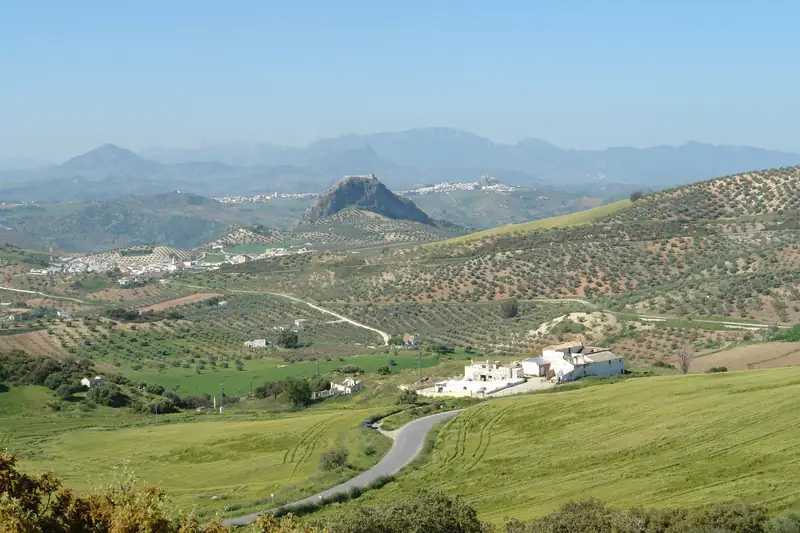
The white villages of Andalusia, or pueblos blancos, are hill towns of whitewashed houses in the mountains between Ronda, Seville and Jerez.
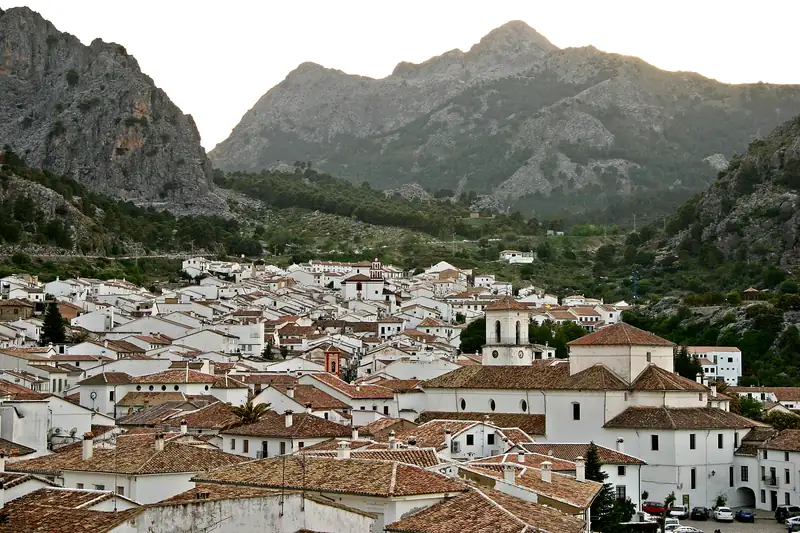
Grazalema is a mountain village of about 2,000 people inside the Sierra de Grazalema Natural Park, 31 km from Setenil.

Olvera is a white town of about 7,800 people in the Sierra de Cádiz, 15 km from Setenil de las Bodegas.
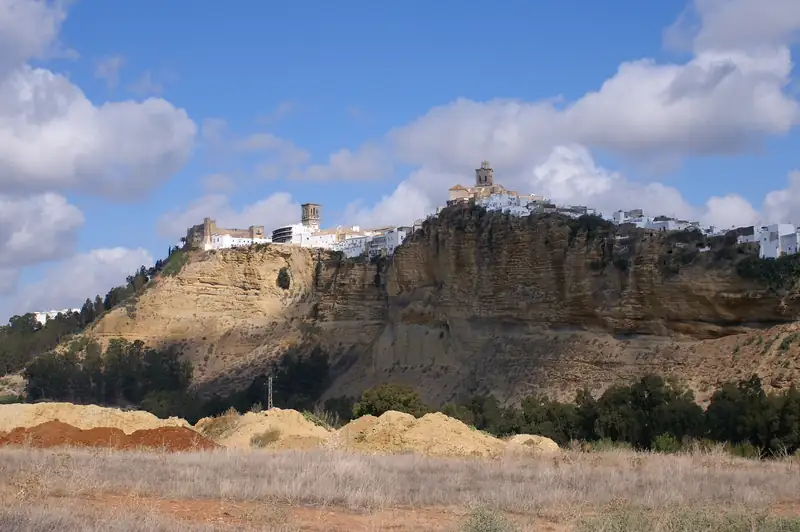
Arcos de la Frontera is a town of about 31,000 people whose old town sits on a sandstone ridge above vertical cliffs over the Río Guadalete.