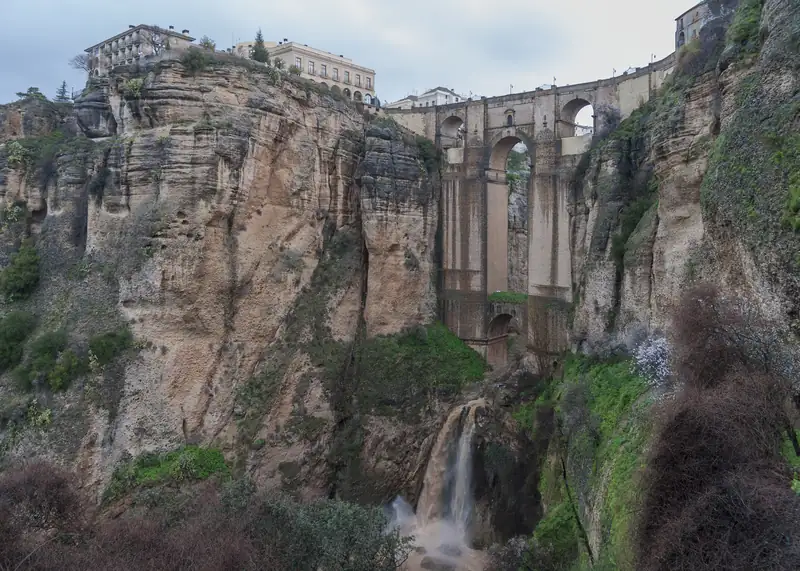
Acinipo, the ruins of a Roman town also called Ronda la Vieja, used to be free to visit but has been closed since storms in March 2025 brought down part of its access road. The road was still closed in February 2026, and the site was still listed closed in October 2026. Check with the Junta de Andalucía before going.
Is Acinipo open?
No. Acinipo has been closed to visitors since storms in March 2025 caused a landslide that cut the MA-7402, the road up to the site. The Spanish newspaper El Español still listed the MA-7402 at Acinipo as closed on 24 February 2026, and when we checked the Junta de Andalucía’s page for the site in October 2026, it still said access was closed. The Junta, Andalusia’s regional government, runs the site and says it will announce when it can reopen.
Before you go, do two things:
- Check the Junta de Andalucía’s page for the Enclave Arqueológico de Acinipo, which carries the closure notice.
- Or call the site’s listed number, 951 041 452.
The Junta lists the site itself as closed, not only the road, so don’t plan to walk in on the footpath from Setenil instead. When Acinipo reopens we will update this page.
Where Acinipo is
Acinipo sits on a limestone plateau 999 m above sea level, between the mountains around Ronda and the Sierra de Grazalema. It belongs to the municipality of Ronda, in Málaga province, and is about 9.6 km by road from Setenil de las Bodegas, on the CA-4223 and MA-7402.
The height gave the town its views and its defences. The Junta says the plateau looks out over three provinces, Cádiz, Málaga and Seville, and controls the upper valleys of two rivers, the Guadalhorce and the Guadalete.
A short history of Acinipo
The Junta’s summary of the site sets out a long and broken timeline:
- About 3000 BC: first settlement, in the Copper Age.
- 9th and 8th centuries BC: contact with the Phoenician trading towns on the Málaga coast.
- End of the 7th century BC: the plateau is abandoned.
- 5th century BC: people return, in the Iberian period.
- From 206 BC: Romans arrive. Acinipo gets monumental buildings, mints its own coins and later becomes a municipium, a self-governing Roman town.
- 3rd century AD: decline sets in, and by the end of that century the area’s administration has passed to Arunda, the Roman town that became Ronda.
- From the 16th century: the ruins are known as Ronda la Vieja, “old Ronda”.
The name itself is old. It first appears in writing, as Acinippo, in the works of Pliny the Elder and Ptolemy, and the town’s coins carry a bunch of grapes. Spanish Wikipedia notes that this led to a reading of the name as coming from acini, the Latin for grapes.
Setenil’s tourist office links its own town’s first settlement to the decline of Acinipo in the 3rd century. We found no archaeological source that confirms it, so treat that as local tradition.
What you can see at Acinipo
The Roman theatre
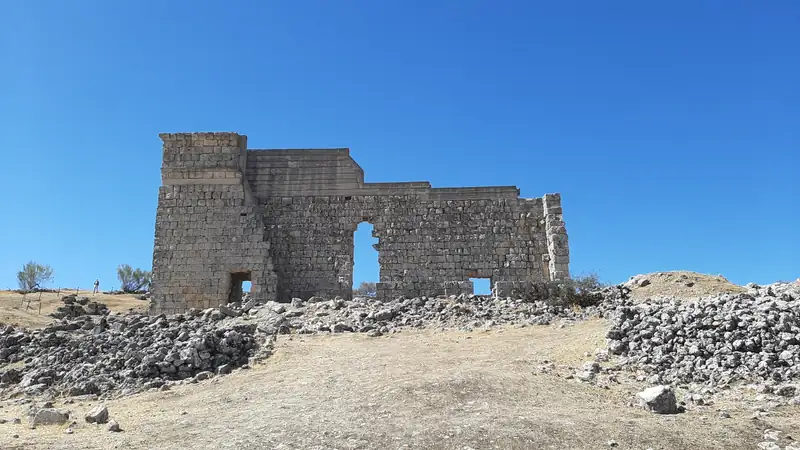
The theatre is Acinipo’s best-known building. The Junta calls it one of the oldest and most distinctive in Roman Hispania. It may date from the middle of the 1st century BC and measures about 62 m across. The builders cut the rows of seats straight into the natural limestone of the hillside.
The stage front, the scaenae frons, is bare stone today, but it once carried sculptures, columns, marble facing and inscriptions. It still stands close to its full height, according to Spanish Wikipedia, built partly from the stone quarried out when the seating was cut. The audience came in through two side entrances.
The house and the baths
Near the old forum, excavations uncovered a domus, a large house that belonged to a wealthy family and was later used for workshops. The town’s baths were built around the turn of the era over a spring with a constant flow, with a palaestra, an open court for exercise, attached.
Before the Romans, and the walls
Recent digs have also found round protohistoric huts from the Copper and Bronze Ages, a reminder that the plateau was lived on for thousands of years before Rome. A wall once ran right round the town, and stretches of it, with traces of round towers, still show at ground level.
How the site is protected
In 2011 the Junta protected the whole Acinipo plateau and a wide margin around it, listing the “Ciudad Romana de Acinipo” as a Bien de Interés Cultural, Spain’s highest heritage category, by Decreto 22/2011. The site is part of the Junta’s network of cultural spaces and is managed from its Málaga office.
Visiting Acinipo when it reopens
The site is currently closed and the Junta gives no reopening date. Its page listed entry as free (“Gratuito”) when we checked in October 2026; confirm that when the site reopens. The site’s regular opening days and hours were not on the Junta’s page when we checked, only the closure notice. An older information sheet said it closed on Mondays, but don’t rely on that; check the current hours when the reopening is announced.
Animals are not allowed, except assistance dogs. The plateau sits at nearly 1,000 m, so dress for the weather and bring water.
Combining Acinipo with Setenil and Ronda
Acinipo is close to both towns, so it was an easy add-on to a day in Setenil or Ronda. None of the day tours we list stop at Acinipo, so for now you would need your own car, and the road is the problem.
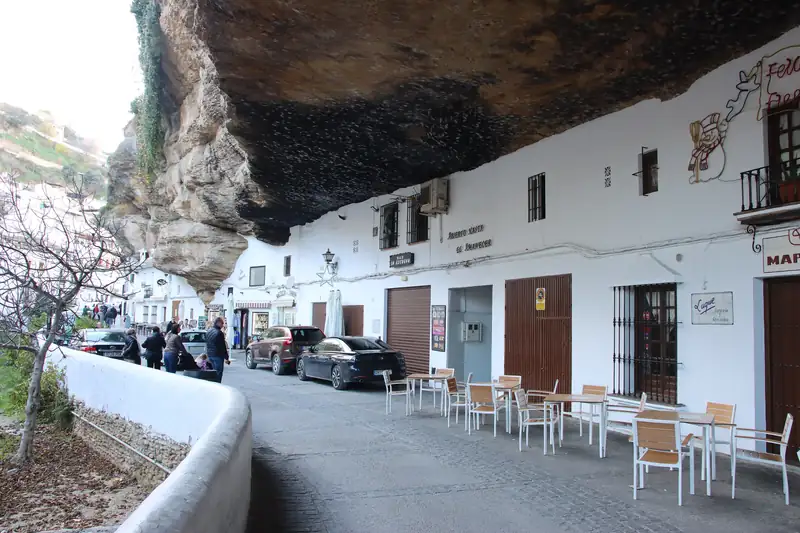
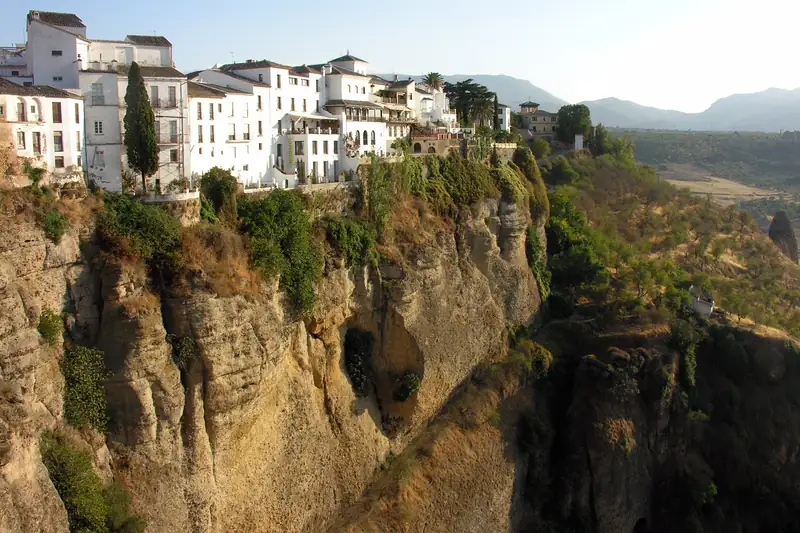
While the site is closed, Setenil’s own history is a good substitute: its Moorish castle and the story of the 1484 conquest are a short walk from the rock streets. In Ronda, the Puente Nuevo and the El Tajo gorge are the obvious first stop. Several day tours cover Ronda and Setenil together.