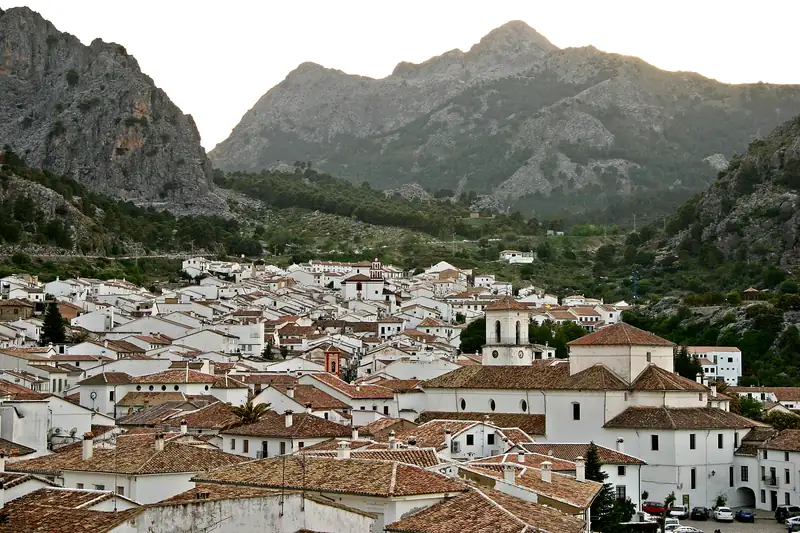
Grazalema and the Sierra de Grazalema Natural Park
Grazalema is a mountain village of about 2,000 people inside the Sierra de Grazalema Natural Park, 31 km from Setenil.
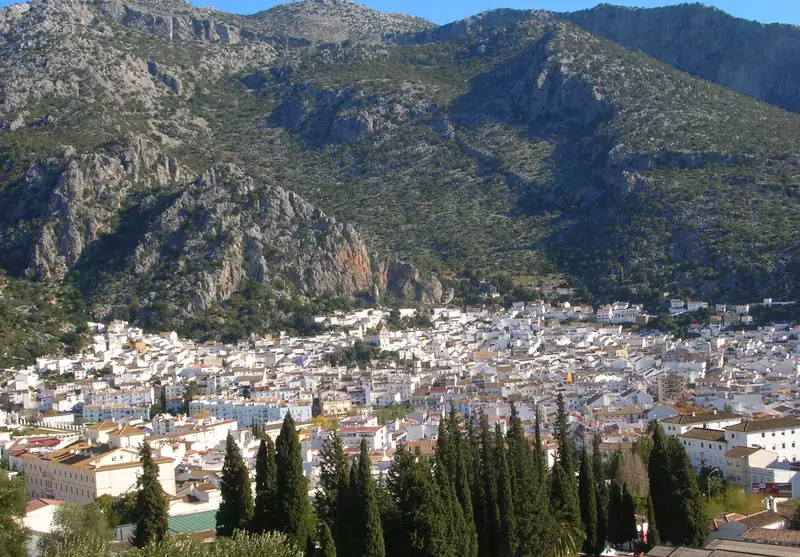
Ubrique is a white town of 16,615 people in the Sierra de Cádiz, about 55 km from Ronda, known across Spain for leather goods. It sits where the Grazalema and Los Alcornocales natural parks meet. Come for the leather museum in a 17th-century convent, the Roman town of Ocuri and the 3.4 km Roman road to Benaocaz.
Ubrique makes leather. Its workshops have turned out leather goods since the 17th century, and the Junta de Andalucía’s tourism site calls it one of the leading production centres for leather goods. The town has 16,615 people (INE, 2025) and fills a narrow valley where the Sierra de Grazalema and Los Alcornocales natural parks meet. It is about 55 km from Ronda, roughly 1 hour 10 minutes, and about 65 km from Setenil de las Bodegas.
Most visitors come for the leather museum, the Roman town of Ocuri and the old Roman road from Benaocaz.
The Junta’s tourism site traces the trade back to the leather-working methods left by the town’s Muslim population, and dates the first leather factories to the 17th century. Today, it says, leather is the force behind the local economy. Cádiz’s provincial tourism board adds that Ubrique’s workshops combine traditional craft with new techniques and export for leading fashion brands.
Expect a working town, bigger and busier than the white villages around it.
The Museo Manos y Magia en la Piel (Hands and Magic in Leather) is Ubrique’s leather museum. It fills the old cells on the upper floor of the 17th-century Convento de Capuchinos, on Avenida Herrera Oria, beside the old tanneries where hides were once cured. Old and modern machines for making leather goods stand in the cloister, and the route upstairs runs from the oldest designs to the newest. The visit starts at the former cell of Fray Diego José de Cádiz, a friar linked to the convent.
| Ticket | Price (checked October 2026) |
|---|---|
| General | €3 |
| Pensioners and retired | €2 |
| Family (parents and children) | €5 |
| Groups of 25 to 55 | €35 |
Prices are from the Junta de Andalucía’s tourism listing for the museum. It gives no opening hours, and hours change with the season, so check with the tourist office before you go.
On the hill called the Salto de la Mora, just outside Ubrique, are the ruins of the Roman town of Ocuri, which the Junta’s tourism site says reached its peak in the 2nd century. Cádiz’s tourism board singles out a columbarium-type tomb, a monument with niches for funerary urns, which it says has very few parallels in the Iberian peninsula.
Visits are guided. The site’s own website did not load when checked, and no current timetable or fee could be confirmed, so ask at the tourist office before you plan your day around it.
Ubrique’s old centre is a Conjunto Histórico, a protected historic ensemble, with narrow streets of medieval layout. Cádiz’s tourism board picks out:
The Junta’s tourism site recalls that in 1432 Nasrid troops defeated a Christian army here, the Rout of Ubrique, and that the town fell to the Catholic Monarchs in 1485, the same year as Ronda.
The classic walk from Ubrique follows a well-preserved Roman road to the village of Benaocaz. Cádiz’s tourism board gives 3.4 km and says the last part, towards Ubrique, runs through oak woods dotted with cattle farms, with information boards along the way explaining the road’s origins.
The Junta’s trail sheet puts the low end at 351 m and the high end at 763 m, so starting in Benaocaz gives you a mostly downhill walk into Ubrique. Benaocaz is about 7 km by road, so arrange a lift or a taxi for one direction, or walk both ways. Take water.
Half a day covers the museum, a walk through the old town and lunch. Add a couple of hours for the Roman road, or for a guided visit to Ocuri if you can book one. With an early start, Ubrique and Grazalema fit into one day from Ronda.
Ubrique is a car trip. From Ronda, the route climbs the A-374, turns onto the A-372 towards Grazalema, then drops south on the A-2302 through Villaluenga del Rosario and Benaocaz. It is about 55 km and 1 hour 10 minutes on mountain roads. From Setenil it is about 65 km, around 1 hour 25 minutes, either through Ronda or past Grazalema. Grazalema itself is about 27 km from Ubrique, and El Bosque about 15 km.
None of the day tours on the tours page stops in Ubrique.
Ubrique is too far from Setenil for a quick detour, but it fits a day in the Sierra de Grazalema. A good loop from Ronda: Grazalema in the morning, down through Villaluenga and Benaocaz to Ubrique for the museum and lunch, then back. The Grazalema guide covers the villages and permit trails of the park, and Zahara de la Sierra and Arcos de la Frontera make other good stops on the white villages route.
For a base, Ronda has the widest choice; see where to stay in Ronda.
Leather. The Junta de Andalucía's tourism site calls Ubrique one of the leading production centres for leather goods and says the industry drives the town's economy. The first leather factories opened in the 17th century, and Cádiz's tourism board says local workshops export for well-known fashion houses. The town's leather museum tells the story in a former Capuchin convent.
It is worth a half day if leather, Roman history or walking interest you. Ubrique is a working town of more than 16,000 people rather than a pretty village, but its old centre is a protected historic ensemble, and the leather museum, the Roman site of Ocuri and the Roman road from Benaocaz make a good combination. It is too far from Setenil for a quick detour.
The Junta's tourism listing for the Museo Manos y Magia en la Piel, in the Convento de Capuchinos on Avenida Herrera Oria, gave general entry at €3, pensioners €2 and a family ticket at €5 when checked in October 2026. Opening hours change through the year, so check with the museum or the tourist office before you travel.
About 55 km by road, roughly 1 hour 10 minutes. The route climbs the A-374 out of Ronda, turns onto the A-372 towards Grazalema, then drops through Villaluenga del Rosario and Benaocaz on the A-2302. From Setenil de las Bodegas it is about 65 km, around 1 hour 25 minutes, and Grazalema is about 27 km from Ubrique.
Ocuri is a Roman town on the hill called the Salto de la Mora, just outside Ubrique. The Junta's tourism site says it reached its peak in the 2nd century. Cádiz's tourism board picks out its columbarium-type tomb, a type with very few parallels in the Iberian peninsula. Visits are guided, so ask the tourist office about current times and booking.
Grazalema is a mountain village of about 2,000 people inside the Sierra de Grazalema Natural Park, 31 km from Setenil.
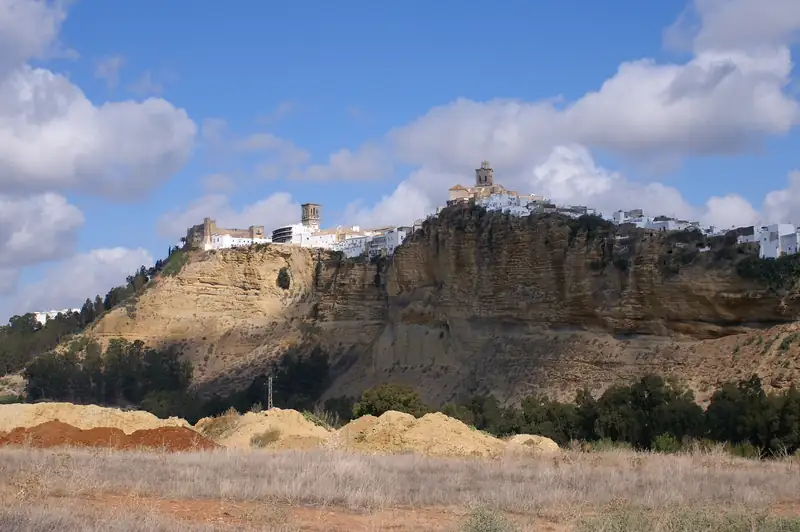
Arcos de la Frontera is a town of about 31,000 people whose old town sits on a sandstone ridge above vertical cliffs over the Río Guadalete.
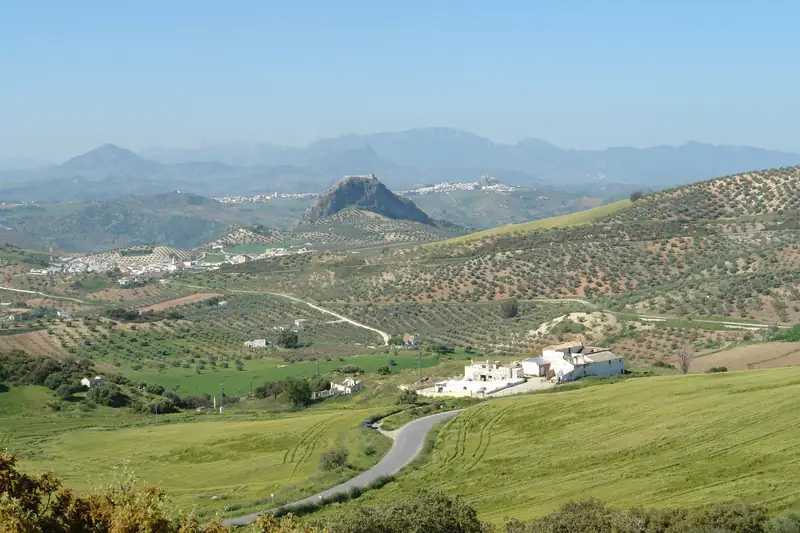
The white villages of Andalusia, or pueblos blancos, are hill towns of whitewashed houses in the mountains between Ronda, Seville and Jerez.
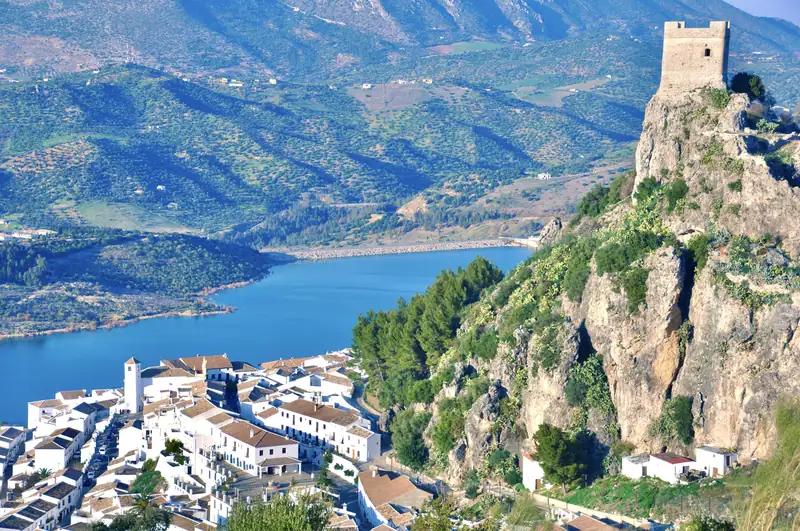
Zahara de la Sierra is a white village of about 1,300 people on a hillside inside the Sierra de Grazalema Natural Park, crowned by a 13th-century Nasrid castle and overlooking the turquoise Zahara-El Gastor reservoir.