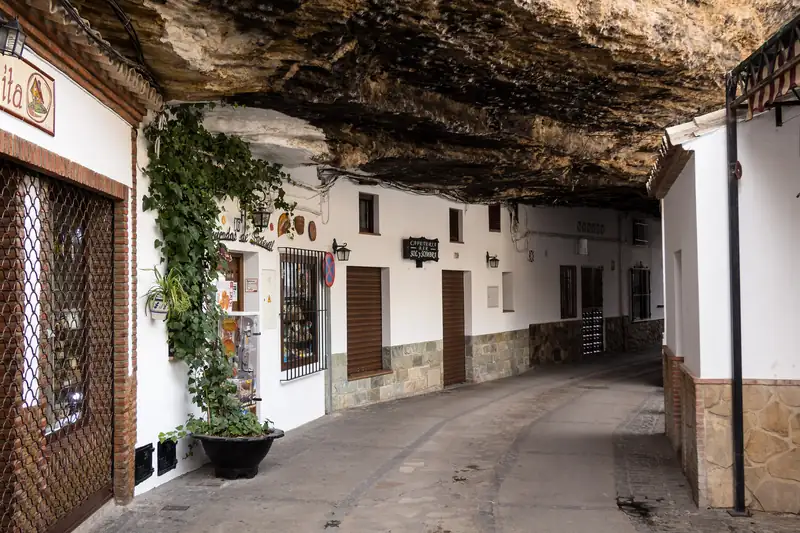
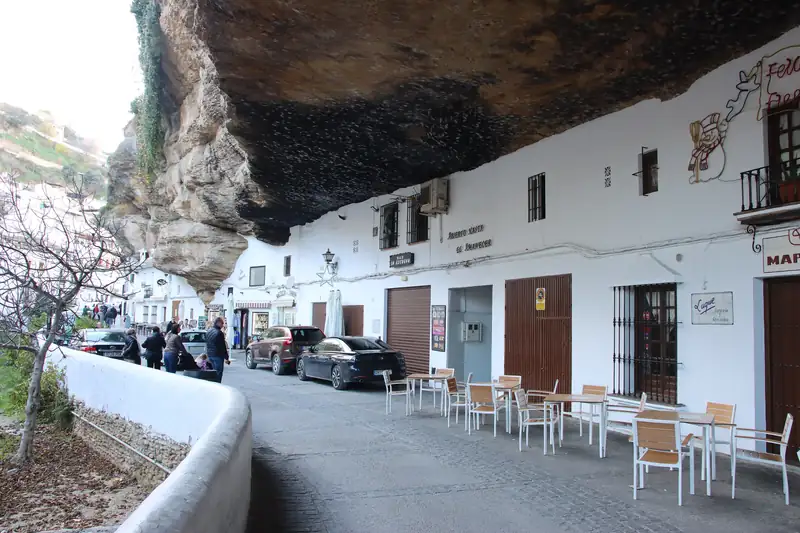
Calle Cuevas del Sol and Calle Cuevas de la Sombra are the two streets that make Setenil de las Bodegas famous, with houses and bars set under overhangs of rock worn out by the Río Trejo. Cuevas del Sol faces south and gets the light. On Cuevas de la Sombra the rock roofs the street like a tunnel.
Business Today and the blog Messy Nessy Chic have both called Setenil de las Bodegas the town that lives under a rock. The nickname holds up. Along two streets in particular, Calle Cuevas del Sol and Calle Cuevas de la Sombra, the cliff leans out over the houses so far that the rock is the roof, and in places it covers the street too.
The Spanish poet Gerardo Diego put it more neatly, in lines the tourist office quotes: Setenil is a place “donde el cielo es de Roca”, where the sky is made of rock.
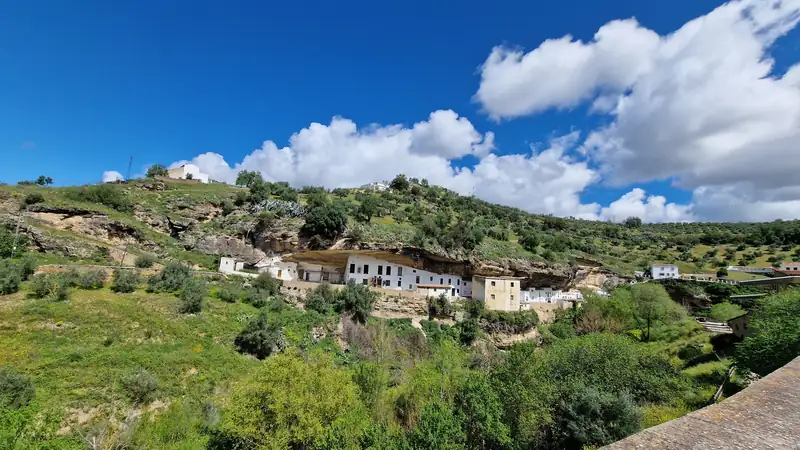
Setenil sits in a canyon about 5 km long cut by the Río Guadalporcún, which along this stretch is called the Río Trejo. The canyon walls are calcarenite, a soft, sandy limestone made from ancient marine sediments full of fossils. Spain’s geological survey, the IGME, lists them as the “Calcarenite Cliffs of the Trejo River”.
Soft rock and running water explain the shape. The river cut deep into the rock, and water dissolving the limestone over a very long time hollowed the cliffs into ledges, shallow caves and long overhangs. On Cuevas de la Sombra, one of them reaches right across the street.
How people used the rock
People have lived in these shelters since prehistory. The proof is a small Venus figurine, the Damita de Setenil, found during excavations in Calle Calcetas in 1997 and dated to about 5,000 years old.
The houses you see today follow a simple idea. Rather than dig into the rock, builders took the natural hollows and closed them off with a front wall, letting the rock overhead do the work of a roof. A university blog from the Universidad Pablo de Olavide describes it as people taking advantage of what nature had already made, and gives the Spanish name for the type: “abrigo bajo las rocas”, a shelter under the rocks. Spanish Wikipedia and the Cádiz province tourism site describe houses under the rock, on top of it and inside it, and Setenil has all three.
It made sense for reasons beyond saving on building work. The tourist office says both cave streets keep their own microclimate, warm in winter and cool in summer, and that you can walk down them in the rain without getting wet.
Calle Cuevas del Sol
Cuevas del Sol is the street on the postcards. It faces south, so it gets more light than its shady twin, and the cave houses along it sit in natural hollows under the rock. Andalusia’s official tourism site calls it the most visited and liveliest part of town, and the tourist office notes its “numerosos bares y restaurantes”.
That makes it the place to sit outside with a drink and look at the rock above you. The town uses it for parties too: during the 2025 Feria in August, the daytime fair was held on Calle Cuevas del Sol.
It is a public street, open at all hours, with no ticket, at the low end of the old town, near the river. A bus stop and a car park are a couple of minutes’ walk away, and our Setenil map pins the street, the car parks and the viewpoints above it.
Calle Cuevas de la Sombra
Cuevas de la Sombra is the darker, stranger twin. Here the overhang reaches right across the street, so you walk through a long tunnel lined with house fronts and tapas bars, under a ceiling of bare rock. Promotional copy often claims the sun never reaches it. What you can rely on is that it is the shadier of the two, and the better one to head for on a hot afternoon.
The difference between the pair is all in the names. Sol means sun and sombra means shade.
The other rock streets
Sol and Sombra get the crowds. The tourist office lists several more cave streets, and they are quieter:
- Calle Herrería, Calle Mina and Calle Calcetas: narrow, stepped lanes of cave houses dropping down to the river. The tourist office quotes an unnamed writer who called Herrería one of the most beautiful and romantic streets in Andalusia. Calcetas runs below the old Moorish wall and is where the Damita was found.
- Calle Jabonería and Calle Cabrerizas: these follow the river, open to the water on one side, with cave houses on the other. The tourist office says they were film locations for the 1970s TV bandit series Curro Jiménez, and a 2021 university blog says the crew spent two or three days filming here in 1977.
- Cuevas de San Román: a riverside group of cave houses that links the river and the town. Spanish Wikipedia dates them to the 16th century.
- Calle Calañas: another street on the tourist office’s list of cave streets.
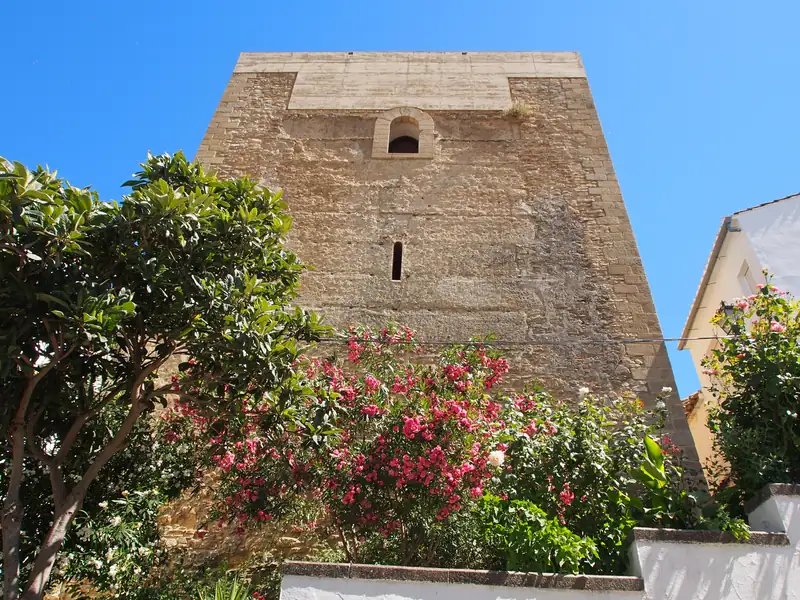
Our walking route through Setenil strings all of these together with the castle keep, the church and the viewpoints.
Tips for visiting the rock streets
Come early or late. Day-tour coaches arrive from mid-morning to mid-afternoon, and Cuevas del Sol is the street they come for. Before 10:00 or after 18:00 in summer and at weekends, the streets are much quieter.
Park on the edge. Don’t try to drive down to the rock streets. Leave the car on the edge of the village and walk in. The car park beside the bus stop, marked free on OpenStreetMap, is the closest to Calle Cuevas del Sol; the getting there guide names every car park and the one that charges.
Remember people live here. These are working streets in a town of about 2,600 people. Many doors are bars and shops, but plenty are front doors. Keep photos to the street.
Use the shade. July and August average highs are in the low 30s °C. Cuevas de la Sombra stays cooler than the open streets, so save it for the hottest part of the day.
Go on with the day. Setenil is one of the White Villages of the Sierra de Cádiz, and the white villages guide covers the rest of them. Most day tours pair it with Ronda, about 30 minutes’ drive away. If you would rather not drive, several day tours include a guided walk through the cave streets. Our top pick has the longest, at almost two hours, on a semi-private day from Málaga for seven people at most.