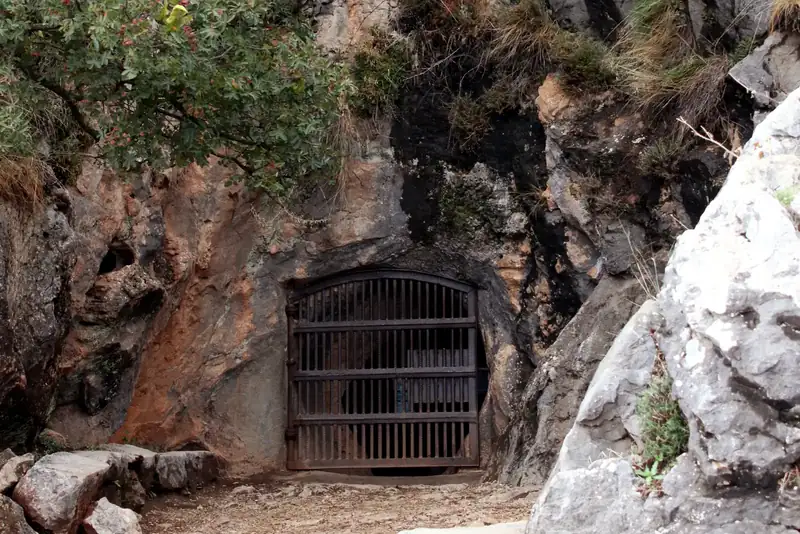
Cueva de la Pileta: booking the painted cave near Ronda
Cueva de la Pileta is a prehistoric painted cave near Benaoján, about 20 to 25 km from Ronda.
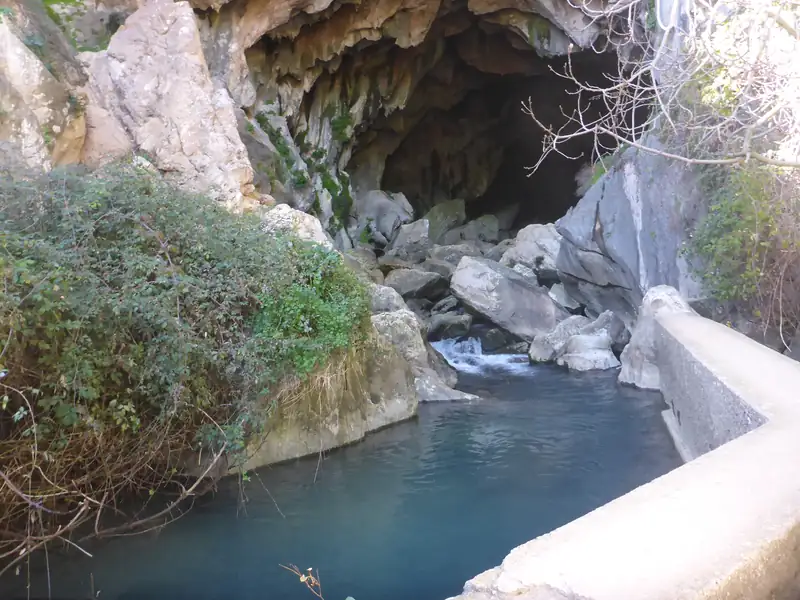
The Cueva del Gato is a cave near Benaoján, about 18 km from Ronda, where an underground river pours out of a cliff into a cold, clear pool. You cannot go inside without a caving permit, but a free 2.2 km path from Benaoján station leads to the mouth. Montejaque and the Hundidero cave are at the other end.
The Cueva del Gato is the exit of an underground river. The río Gaduares sinks into the ground at the Hundidero gorge near Montejaque, runs more than 4 km through the mountain, and pours out of a big cave mouth near Benaoján into a cold, green pool. You cannot go inside without a caving permit. You can walk to the mouth for free on a 2.2 km riverside path from Benaoján station, about 18 km from Ronda.
From Setenil de las Bodegas it is about 28 km by way of Ronda, around 45 minutes.
The cave is the southern mouth of the Hundidero-Gato system. The Junta de Andalucía’s tourism site calls it the most important karst system in Andalusia, with chasms, lakes, siphons and chambers up to 70 metres high. Water that disappears at the Cueva del Hundidero, in Montejaque, comes out here as the largest spring in the Sierra de Grazalema, with an average flow of 500 litres a second according to the Junta’s trail sheet. It tumbles in small falls into the Charco Frío and then joins the río Guadiaro.
People used the cave long before the walkers. The Junta’s sheet says paintings show a human presence since at least the Palaeolithic, about 18,000 years ago, and the tourism site adds Neolithic pottery and paintings both at the mouth and inside. The same site says it shelters one of the largest colonies of cave bats. In 2011 the Junta declared it a Monumento Natural, a protected natural monument.
No. At the end of the path a sign at the cave mouth says you may not continue: the Junta describes the cave as dangerous and says entry needs both an authorisation and expert knowledge. Crossing the system from the Hundidero to the Gato is a serious caving trip that needs a permit, equipment and qualified guides, and the river still runs through it. For visitors, the mouth and the pool are the sight.
The Junta’s signed path, the Sendero La Cueva del Gato, is short and easy.
| Item | Detail (checked October 2026) |
|---|---|
| Start | Benaoján railway station |
| Length | 2.2 km one way, back the same way |
| Time | About 1 hour each way |
| Difficulty | Low; farm track and stony earth path, with slippery steps near the cave |
| Permit | Not needed |
| Parking | About 20 spaces at the start |
| Entry | Free |
From the station, take the road downhill beside the railway, cross the level crossing with care, then cross the bridge over the río Guadiaro. The path follows the river past the Molino de las Cuatro Paradas, an old mill that kept its four millstone shafts, and along stretches of a medieval road built over the Roman road that linked Carteia, near San Roque, with Acinipo. Past the Hotel Cueva del Gato, a wooden footbridge crosses the Guadiaro. You pass under the railway bridge and the cave mouth appears ahead, with a stair cut in the rock climbing towards it.
Watch your footing on the last steps. The Junta’s sheet warns that they are slippery.
The pool below the mouth is the Charco Frío, the cold pool. In summer people swim in it, and the Junta’s sheet describes its cold, clear water as a place to rest in the shade of the trees on its bank. The banned list on the same sheet covers fishing, fires, catching animals and picking plants, not bathing. No official bathing rule turned up either way. The name is accurate: the water comes straight out of the mountain.
Benaoján is the village the path starts from, with 1,427 people (INE, 2025) in two parts: the old village on the hillside and the newer settlement around the station, which grew with the Bobadilla to Algeciras railway. It sits between the limestone of the Sierra de Líbar and the río Guadiaro. The Junta’s tourism site picks out the church of Nuestra Señora del Rosario and the village’s cured pork sausage industry, which it says made Benaoján famous.
The Catholic Monarchs destroyed its castle in 1487, and in 1571, after the Moriscos were expelled, families from Castile resettled it, according to the same source.
Benaoján is also the village for the Cueva de la Pileta, a painted Palaeolithic cave a few kilometres south, visited only on booked guided tours. A morning at Pileta and an afternoon walk to the Cueva del Gato makes a full day.
Montejaque is 3 km from Benaoján, at the other end of the underground river, with 945 people (INE, 2025). Its upper district keeps the steep, narrow streets of the Andalusí village, and the church of Santiago, from the early 16th century, stands in the lower part of town. The name comes from Monte Sacrum, the sacred mountain, according to the Junta’s tourism site. In 1810 the guerrilla leader José de Aguilar led 250 men from Montejaque, Benaoján and three neighbouring villages to beat a French force of 600 infantry and 90 cavalry at the bridge over the Gaduares.
The Cueva del Hundidero. This is where the river goes in. The cave lies at the bottom of a gorge about 50 metres deep and is a Bien de Interés Cultural for its Copper Age paintings. In the 1920s engineers built a concrete dam across the gorge to hold back a reservoir. It never held: the limestone leaked, and the dam was abandoned. As at the Gato, going inside is caving territory and needs an authorisation.
From Ronda: take the A-374 towards Seville, then the MA-7401 for Benaoján and follow signs for the station. It is about 18 km, about 30 minutes.
From Setenil: drive towards Arriate and Ronda on the CA-9122 and MA-7403, then follow the Ronda directions. About 28 km and 45 minutes. Do not trust a satnav that sends you past Acinipo on the MA-7402: that road has been closed since a 2025 landslide.
Without a car: Renfe has run the Algeciras line by road since March 2026, and its all-stations replacement buses call at Benaoján. Check the timetable before you rely on it.
Ronda is 30 minutes away and has the widest choice of hotels; see where to stay in Ronda. The Hotel Cueva del Gato sits on the path itself. For a wider loop through the park, the Grazalema guide covers the villages and permit trails on the Cádiz side, and things to do in Ronda fills the rest of the day.
Not as an ordinary visitor. A sign at the mouth forbids going further, and the Junta de Andalucía describes the cave as dangerous, needing an authorisation and expert knowledge. Caving through the Hundidero-Gato system is allowed only with a permit, the right equipment and qualified people. You can walk to the entrance, look in and sit by the pool for free.
People do swim in the Charco Frío, the pool below the cave mouth, in summer. The Junta's trail sheet describes its cold, clear water and does not list bathing among the banned activities, which are fishing, fires, catching animals and picking plants. No official bathing rule was found either way. The name means cold pool, and the water lives up to it.
Drive or take the bus to Benaoján station, about 18 km from Ronda. The Junta's signed path starts there: cross the level crossing and the bridge over the río Guadiaro, then follow the river 2.2 km to the cave, about an hour each way at an easy pace. A car park with about 20 spaces sits at the start of the path.
Gato is Spanish for cat, and the name is usually explained by the shape of the entrance, which people compare to a cat's face. The Junta de Andalucía's tourism site says English travellers named the cave in the second half of the 18th century, when it drew both scientists and writers interested in the bandit stories of the Serranía de Ronda.
Yes, if you are already at the Cueva del Gato. Montejaque is a village of 945 people about 3 km from Benaoján, with steep upper streets and a 16th-century church of Santiago. Nearby is the Cueva del Hundidero, where the same river disappears underground at the foot of a gorge about 50 metres deep, below an abandoned 1920s dam.
Cueva de la Pileta is a prehistoric painted cave near Benaoján, about 20 to 25 km from Ronda.
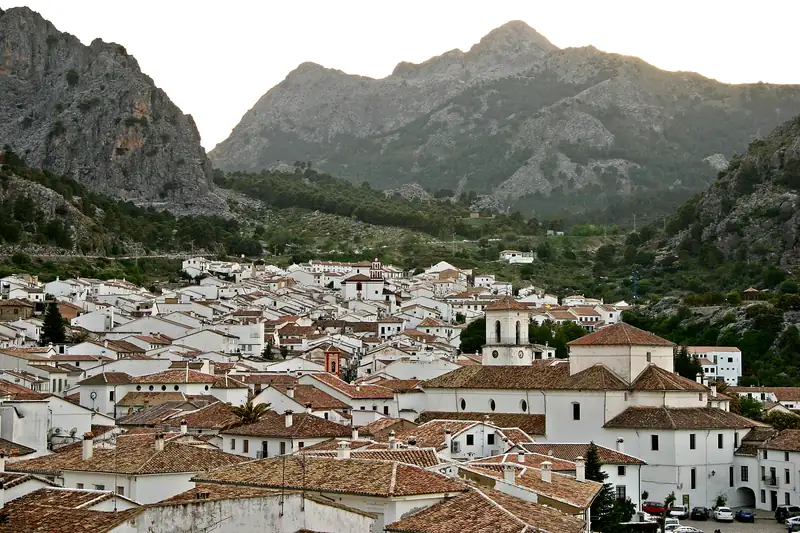
Grazalema is a mountain village of about 2,000 people inside the Sierra de Grazalema Natural Park, 31 km from Setenil.
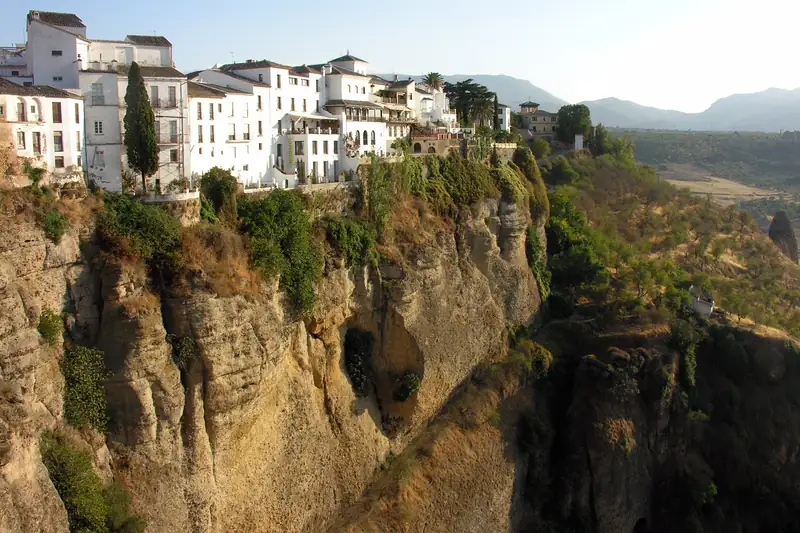
Ronda's main sight is the Puente Nuevo, the 18th-century bridge over the El Tajo gorge, which you can see from above, from inside and from below.
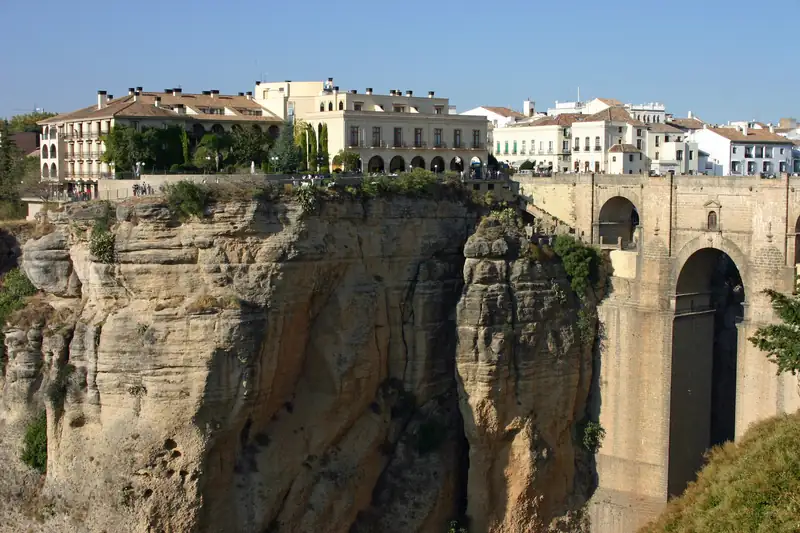
Stay in El Mercadillo, within five minutes of the Puente Nuevo, if it is your first visit or you have no car.