Ronda: Guided Walking Tour with English or Spanish Guide
1.5 hours
A low-cost group walk past the Puente Nuevo, the bullring and the Mondragón Palace, ending in Plaza de España.
from$28
Check availability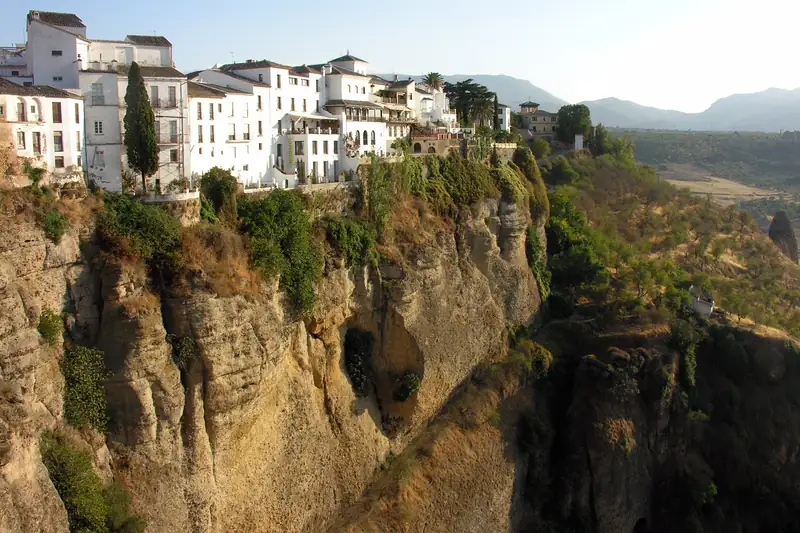
Ronda's main sight is the Puente Nuevo, the 18th-century bridge over the El Tajo gorge, which you can see from above, from inside and from below. Add the 1785 bullring, La Mina at the Casa del Rey Moro, the Mondragón Palace and the Arab Baths. One full day covers the highlights, and Setenil de las Bodegas is 30 minutes away.
Ronda is split in two by El Tajo, a gorge cut by the Río Guadalevín. On one side is the new town, El Mercadillo, with the bullring. On the other is the old town, with its Moorish gates, churches and palaces. Three bridges join them, and the tallest, the Puente Nuevo, is the reason most people come.
Here are the things to do in Ronda, roughly in the order we would do them on a first visit. The tours at the bottom of this page are mostly short walks in Ronda itself; if you are coming from the coast or Seville, see Málaga to Ronda or Seville to Ronda.
With a car, swap the last step for Setenil de las Bodegas, 30 minutes away. A night in town makes the plan easier: our guide to where to stay in Ronda compares the areas, and Ronda parking lists the car parks if you drive in.
The “new bridge” took decades to build and was finished in May 1793. Ronda’s tourist board gives its height as 98 metres. An earlier bridge, thrown up in eight months in the 1730s, collapsed six years later and killed about 50 people.
You can walk across it (it carries the road between the two halves of town), look at it from the Mirador de Aldehuela next to it, or go inside: the chamber above the central arch holds a small interpretation centre, entered from Plaza de España. Our Ronda bridge guide covers its history, every viewpoint and the walk down.
The view everyone wants is from below. Two ways get you there.
The free one is a path that starts at Plaza María Auxiliadora, in the old town, and zigzags down to the Arab arch viewpoint. It is steep and has no shade, so allow about an hour there and back and carry water in summer.
The newer option is the Camino del Desfiladero del Tajo, a ticketed path that opened in April 2024 down to the base of the Puente Nuevo. In September 2026 a 500-metre wooden walkway along the river opened, making the route about 700 metres long. Numbers per hour are limited, so book online through Ronda’s tourist board.
For more adrenaline, a guided via ferrata climbs the gorge walls below the bridge with all the gear included.
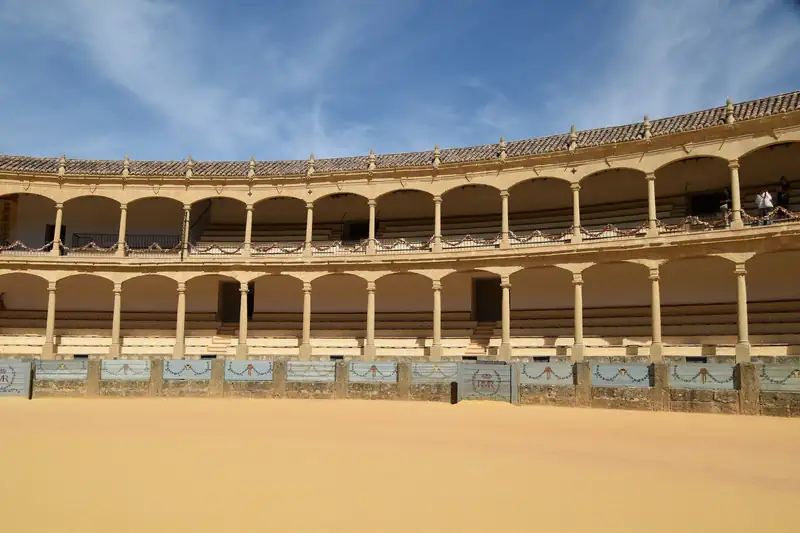
The Real Maestranza bullring opened on 19 May 1785, and the Junta de Andalucía describes it as the first ring built entirely of stone for bullfighting. The architect was Martín de Aldehuela, the same man who finished the Puente Nuevo.
A visit covers the ring and its museum of bullfighting, royal horse tack and old firearms; the Real Maestranza notes that repair work on the building is under way. The ring is open daily, and a ticket costs €10, or €12 with the audioguide (see the table below). Once a year, during the early-September fair, it hosts the Corrida Goyesca, a bullfight Antonio Ordóñez started in 1954; the 2026 edition was on 5 September.
La Mina is a 14th-century stairway cut inside the rock for military use, dropping about 60 metres to the river. Chroniclers say a traitor revealed it to the Castilian army, and Ronda fell in 1485.
The gardens above were laid out in 1912 by the French designer Jean Claude Nicolas Forestier. The house itself is closed for restoration, so you visit the gardens and the mine.
The old town, La Ciudad, is small enough to wander without a map. Start with the palace.
Ronda’s tourist board calls it the town’s most important civil building. Legend says it was the home of Abomelic, son of the Moroccan sultan Abul Hasan, and later of Hamet el Zegrí, Ronda’s last Muslim governor. Most of what you see is later: an 18th-century stone front, a late Gothic courtyard, another with brick arches on marble columns that leads to a garden over the gorge, and a main hall under a carved Mudéjar wooden ceiling. The municipal museum fills the middle floor.
If you would rather have the old town explained, the group walk in our top pick passes the Puente Nuevo, the bullring and the Mondragón Palace in an hour and a half and finishes in Plaza de España.
Ronda’s municipal combined ticket covers the bridge’s interpretation centre, the Palacio de Mondragón, the Casa del Gigante, the Museo Joaquín Peinado and the Arab baths, which helps if you plan to see most of them.
At the bottom of the old town, by the river on Calle San Miguel, are the 13th to 14th-century Arab Baths (Baños Árabes), run by the Junta de Andalucía. The layout follows the Roman model: a cold room, a warm room and a hot room, plus the boiler room and the entrance. The central hall is the largest, roofed with barrel vaults and small domes pierced by star-shaped skylights, and the Junta says the water system is almost complete.
Two older bridges cross the gorge here. The Puente Viejo dates from the 17th century, and the low Puente Romano is from the Muslim period despite its name. Walking back up from the baths to the new town by these bridges makes a good loop.
| Sight | Ticket | Hours | Source |
|---|---|---|---|
| Ronda bullring (Real Maestranza) | €10, €12 with audioguide | Daily: 10:00 to 18:00 (Nov to Feb), to 19:00 (Mar, Oct), to 20:00 (Apr to Sep) | Real Maestranza |
| Arab Baths | €4.50; €3 for students under 26 and retired people; free for under-14s | Tue to Fri from 09:30, closing 18:00 to 20:00 by season; Mon and Sat 10:00 to 14:00 and 15:00 to 18:00; Sun 10:00 to 15:00 | Junta de Andalucía |
| Casa del Rey Moro (gardens and La Mina) | No official price published | 10:00 to 20:00 (Oct to Apr), to 21:30 (May to Sep) | Casa del Rey Moro |
| Mondragón Palace, Puente Nuevo centre | On the municipal combined ticket | Ask the tourist office | Ronda tourist board |
Checked October 2026. The Arab Baths close on 1 and 6 January, 1 May and 24, 25 and 31 December.
Back in the new town, the 19th-century Alameda del Tajo park ends in a balcony on the cliff. From there a path runs along the edge, north towards the Hotel Victoria and south along Paseo de Blas Infante, past the Parador’s terraces, to the Puente Nuevo. Late afternoon is a good time for it.
Nearby, Plaza del Socorro is where the Assembly of Ronda met in January 1918 and approved the green and white flag now used by Andalusia.
Ronda has drawn writers for two centuries. Andalusia’s tourist board credits Romantic travellers such as Théophile Gautier and Prosper Mérimée with making it famous. Rainer Maria Rilke stayed at the Hotel Reina Victoria from December 1912 to February 1913. A scene in For Whom the Bell Tolls by Ernest Hemingway is often linked to events in Ronda in 1936, though he denied it. Orson Welles’s ashes were laid in 1987 at the estate of the matador Antonio Ordóñez, just outside town.
Andalusia’s tourist board lists rabo de toro (oxtail stew), conejo a la rondeña (rabbit), lamb cochifrito, migas with chorizo and almond soup among the local dishes, along with game from the sierra. Look for yemas del Tajo, small egg-yolk sweets, in the cake shops. The hills around Ronda are now a wine subzone of the DO Sierras de Málaga, and an olive oil tour at a Philippe Starck-designed mill just outside town is on our list below.
Ronda is in the northwest corner of Málaga province, about 100 km from Málaga and 125 km from Seville. Driving takes 1 hour 40 to 1 hour 45 minutes from either. Damas buses run from both cities. From the Costa del Sol, see Marbella to Ronda; from the east, Granada to Ronda.
No trains reach Ronda in October 2026. Renfe has replaced the line with buses while Adif rebuilds it, with work expected to last into autumn 2027. The route pages, Málaga to Ronda and Seville to Ronda, have the details and the day tours, and our tours page lists every Ronda and Setenil trip we recommend. For weather by month, see the best time to visit Andalusia.
1.5 hours
A low-cost group walk past the Puente Nuevo, the bullring and the Mondragón Palace, ending in Plaza de España.
from$28
Check availability4 hours
A morning hop from Ronda bus station: coach to Setenil, a ride round the village on the tourist train and free time before the 1pm return.
from$19
Check availability2 hours
Clip on and climb the walls of the El Tajo gorge below the Puente Nuevo with an instructor, a small group and all the gear.
from$50
Check availability2 hours
Your own local guide for two hours through Ronda's park, old quarter and viewpoints, priced per group so it suits families.
from$135 per group (up to 10)
Check availability1.5 hours
A tour of the Starck-designed olive mill and groves outside Ronda, finished with a guided tasting of its organic oils.
from$31
Check availabilityPrices and ratings were taken from GetYourGuide and can change. Booking through these links supports this site at no extra cost to you.
One full day covers the Puente Nuevo, the gorge path, the bullring, La Mina and the old town at a steady pace. Stay a night if you want the bridge without the midday tour groups, or if you also want to see Setenil de las Bodegas, 30 minutes away, or the Cueva de la Pileta near Benaoján. Two nights suits walkers and wine visitors.
Yes, right in town. A free path drops from Plaza María Auxiliadora towards the Arab arch viewpoint; it is steep and shadeless, so allow about an hour there and back. The ticketed Camino del Desfiladero del Tajo opened in 2024 and was extended along the river in September 2026. Book it online through Ronda's tourist board.
Andalusia's tourist board lists rabo de toro (oxtail stew), conejo a la rondeña (rabbit), lamb cochifrito, migas with chorizo, gazpacho serrano and almond soup, plus game dishes from the sierra. For something sweet, look for yemas del Tajo, egg-yolk sweets linked to Ronda's convents. The Serranía de Ronda is also a wine subzone of the DO Sierras de Málaga.
Yes, if you like dramatic settings. The town sits on both sides of a gorge more than 100 metres deep, crossed by an 18th-century bridge you can see from above, inside and below. It does get busy with day trips from the coast, so arrive early or stay over. Pair it with Setenil de las Bodegas to make the drive worthwhile.
Easily. Setenil is 19 km from Ronda, about 30 minutes by car. Autocares Sierra de las Nieves line 66 takes 45 minutes and costs €2.32, with five buses on weekdays, three on Saturdays and none on Sundays or holidays (checked October 2026). A half-day coach trip from Ronda bus station adds a ride on Setenil's tourist train.
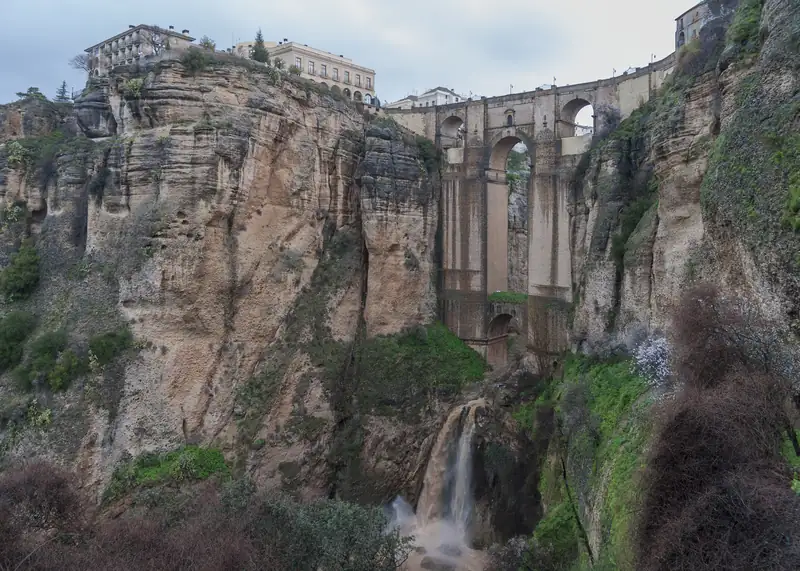
Ronda's Puente Nuevo crosses El Tajo, a gorge more than 100 metres deep, and joins the old and new halves of town.
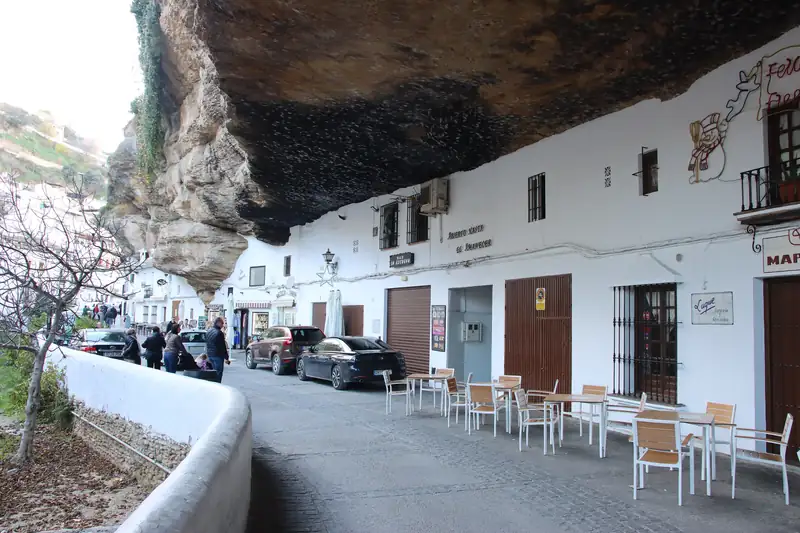
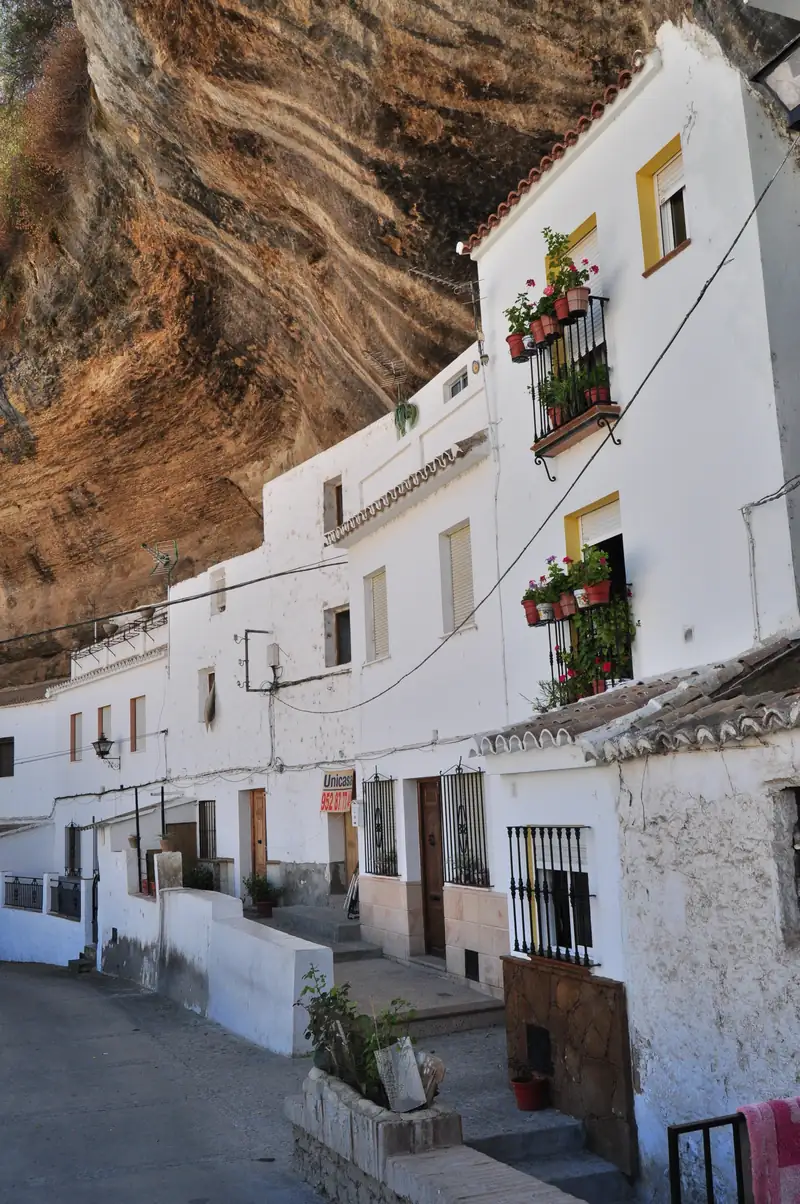
The best things to do in Setenil de las Bodegas are walking the two rock-roofed streets, Cuevas del Sol and Cuevas de la Sombra, climbing to the castle keep and the Encarnación church, and looking over the rooftops from the Carmen viewpoint.
The easiest Ronda day trip from Málaga is a coach tour, and the most popular ones also stop in Setenil de las Bodegas.
Seville to Ronda is about 125 km, roughly 1 hour 45 minutes by car or two hours on the Damas bus.