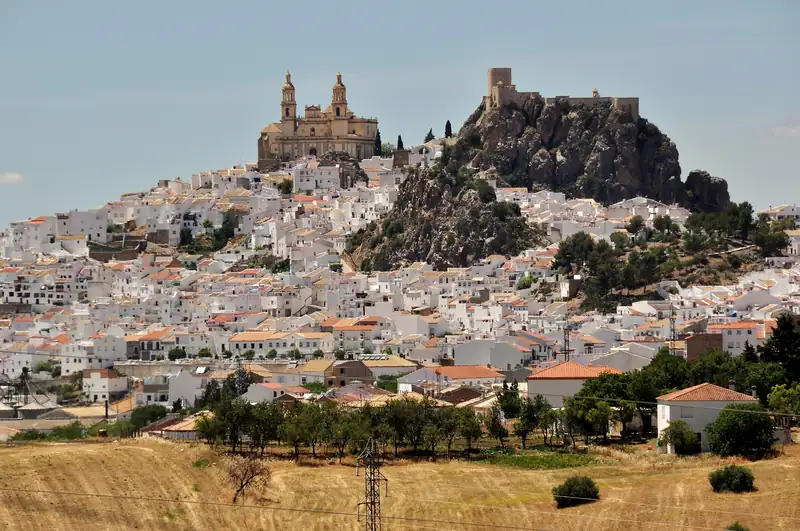
The castle of Setenil de las Bodegas is a Moorish fortress on the crag above the town, held by the Nasrid kingdom of Granada until Castilian forces under King Ferdinand took it in September 1484. When it was first built is debated. Its square keep and the rainwater cistern below survive, and you can visit both.
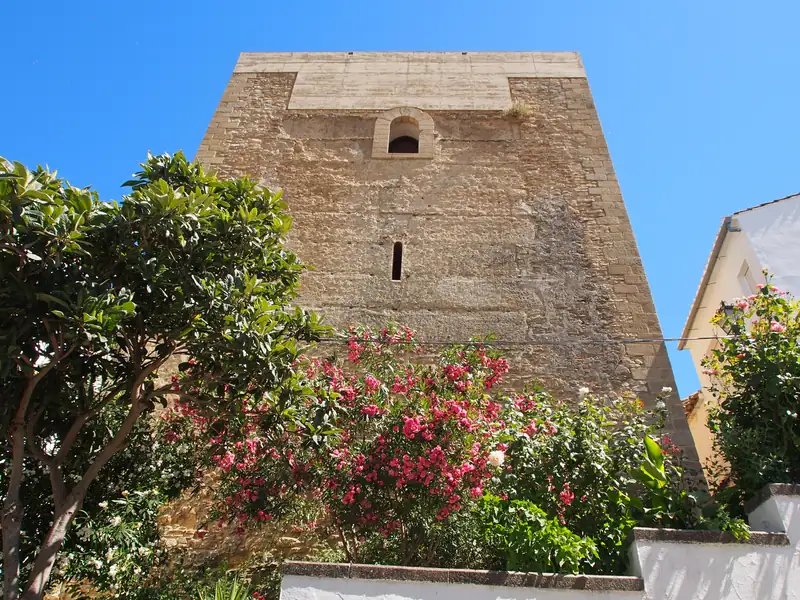
From the rock streets, look up. The square stone tower on the crag above the town is the keep of Setenil’s Moorish castle, a stronghold on the frontier between Christian Castile and the Muslim kingdom of Granada until 1484.
What is left of the castle
The fortress once enclosed the whole crag. What survives:
- The keep (Torreón or Torre del Homenaje). A square tower of rough stone masonry, which the tourist office calls the most striking part of the old alcázar. Inside are three floors used for temporary exhibitions; in 2024 it hosted a painting show called “Setenil 7.0”.
- The aljibe. A rainwater cistern just below the tower that supplied the fortress. Inside, two barrel vaults rest on two central pillars and three brick arches.
- The coracha-mina. Passages cut into the rock so the garrison could draw water from a well during a siege, part of a wall that had dozens of towers.
The keep has staff on the door who count visitors. The Junta de Andalucía’s records show 36,467 visits to the Torreón in 2021. We found no official source for the fee or opening hours, and the unofficial figures online disagree, so ask at the tourist office on Calle Villa. It is in the old town hall, which is worth a look in its own right (see below).
When was the castle built?
The sources don’t agree. The tourist office and the Los Pueblos Más Bonitos de España association describe an Almohad alcázar from the 12th century. Spanish Wikipedia calls it a 13th-century Nasrid fortress. The Cádiz provincial tourism site and Andalusia’s tourism board describe it as medieval, from the 14th and 15th centuries.
Put together, the safest reading is a Moorish fortress begun in the Almohad period or soon after, held by the Nasrid kingdom of Granada until 1484, with the surviving keep rebuilt in the 14th or 15th century. Its origins are still debated.
A short history of Setenil
Prehistory
The rock shelters along the river have been used since prehistory. The best evidence is the Damita de Setenil, a Venus figurine about 5,000 years old found in Calle Calcetas in 1997. The town hall also notes important Neolithic sites in the surrounding area.
Romans nearby
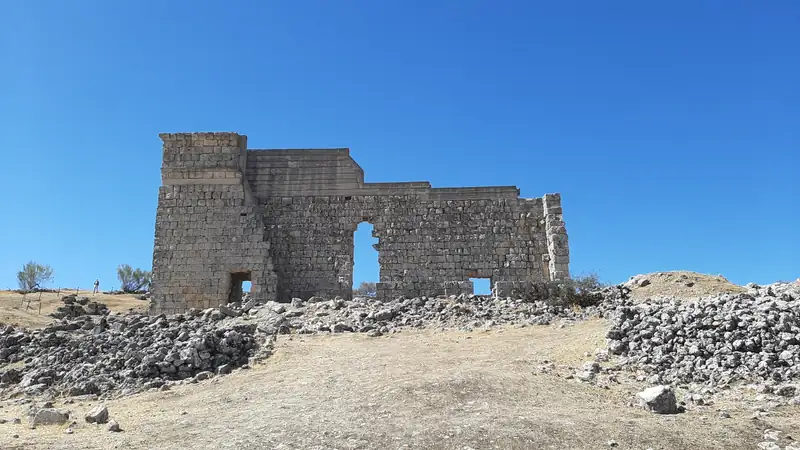
The Roman town in this landscape was Acinipo, about 10 km away on a limestone plateau in the municipality of Ronda. Its ruins are closed to visitors for now.
The Moorish town
The first town on Setenil’s present site was medieval. Under Muslim rule it grew inside the castle walls, in the district still called La Villa. Spanish Wikipedia lists an alcázar, a keep, a medina, baths and a mosque, and calls Setenil one of the few Nasrid fortresses that keep their whole medieval street plan.
The sieges
Setenil’s position on a crag above a gorge made it hard to take. In October 1407, Castilian forces under the regent Fernando de Antequera besieged it with three cannon for about 20 days and gave up. After that, the town hall says, Setenil was seen as almost impregnable.
Tradition says the town held out against seven sieges. Only two are well documented, 1407 and 1484. The number seven belongs to a popular story about the town’s name (more on that below).
The conquest of 1484
Setenil fell in September 1484, during King Ferdinand’s campaign against Granada, after the fall of Álora in June. Artillery decided it. A 19th-century history by Modesto Lafuente, following the chronicles, says the walls were broken by batteries directed by the Marquis of Cádiz, and that the defenders surrendered on condition that they could leave for Ronda.
The town commemorates the conquest on 21 September, the feast of St Matthew. That date is inscribed in the Mudéjar wooden ceiling of the old town hall, built in the early 16th century and now the tourist office. Some sources give 23 September for the surrender and 24 September for the Christian army’s entry. Every October, the Moros y Cristianos festival commemorates the conquest.
The legend of the queen’s son
You will hear a story that Queen Isabel was at the siege and gave birth to a premature son, baptised Sebastián, who died within hours, and that the Ermita de San Sebastián is named after him. The tourist office itself presents this as popular legend. It has no historical basis: Isabel’s recorded births include none in 1484.
After the conquest
Setenil became a royal town, and a charter of privileges in 1501 gave it rights comparable to Seville’s. Settlers planted vines alongside the existing olive and almond groves. In 1630 a royal decree freed Setenil from Ronda’s jurisdiction, and in the Peninsular War (1808 to 1814) residents fought the French as guerrillas. Late in the 20th century, heavy emigration cut the population.
Recognition came later. The Junta de Andalucía declared the old town a Conjunto Histórico-Artístico (historic-artistic site) in 1985, the castle and historic centre are both listed as Bienes de Interés Cultural, and in 2023 the Junta named Setenil a Municipio Turístico. Since 2019 it has been a member of Los Pueblos Más Bonitos de España, the association of Spain’s most beautiful villages.
What the name means
Setenil
The popular explanation is the Latin septem nihil, “seven times nothing”, for the seven sieges that failed. It is folk etymology. The name appears as Setenil from the 13th century, before most of the supposed sieges, and only two sieges are documented. Scholars have proposed several Arabic origins instead, such as Sâtt an-nil, “bank of the indigo”. None is proven, and the real origin is unknown.
De las Bodegas
A bodega is a wine cellar or winery. The full name refers to the wineries that grew up after Christian settlers added vineyards to the land around the town. Phylloxera, the insect that destroyed vines across Europe, reached Spain in 1878 and eventually wiped out Setenil’s vines too; we found no record of the local date. Wine is coming back on a small scale, and the town hall reports the first Setenil reds in many years.
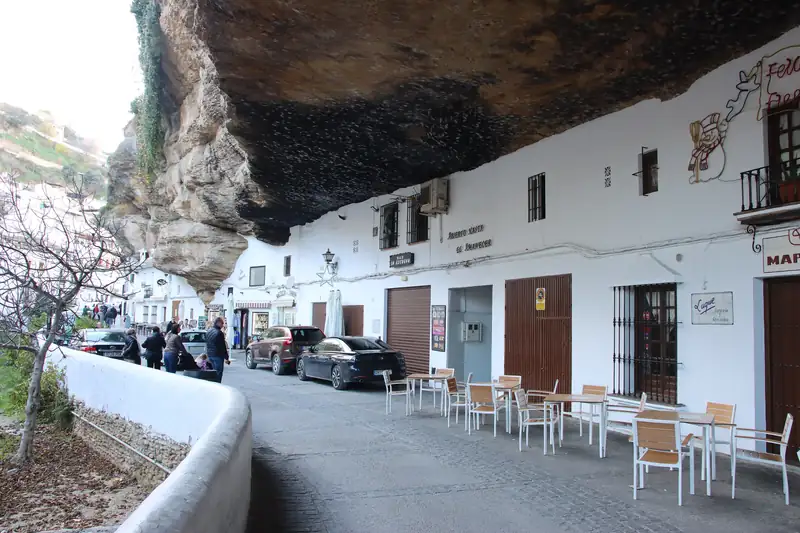
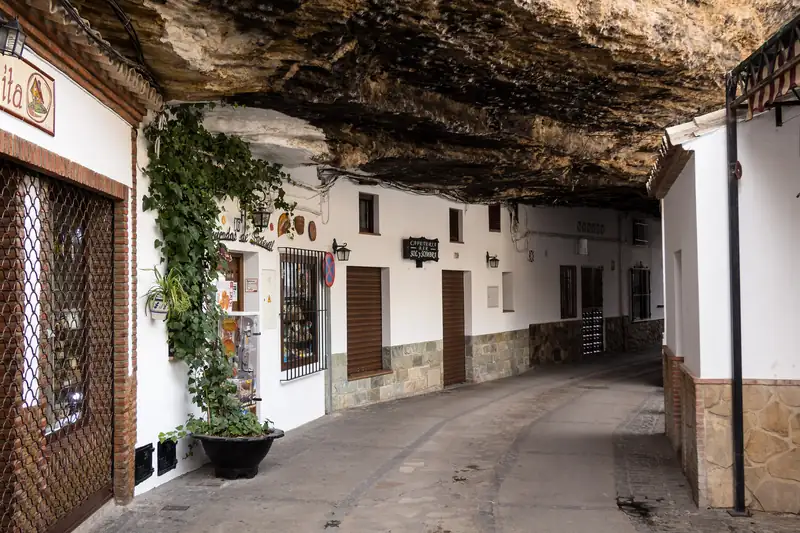
For the streets that grew up under the rock, read our page on Cuevas del Sol and Cuevas de la Sombra. To see the keep, church and old town hall on foot, follow our walking route through Setenil.