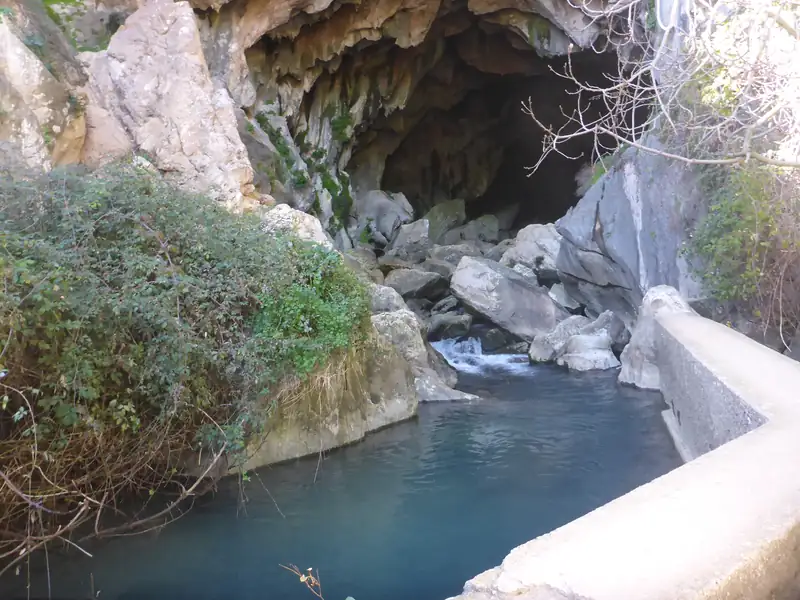
Cueva del Gato: the river cave between Benaoján and Montejaque
The Cueva del Gato is a cave near Benaoján, about 18 km from Ronda, where an underground river pours out of a cliff into a cold, clear pool.
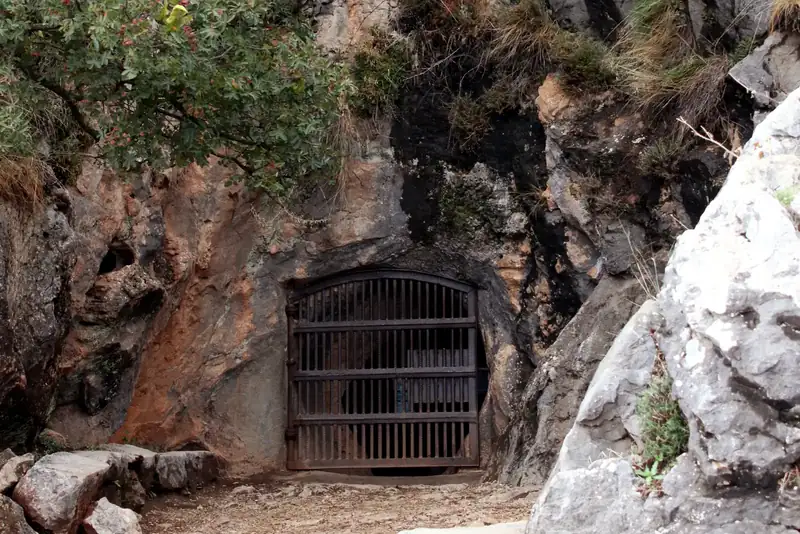
Cueva de la Pileta is a prehistoric painted cave near Benaoján, about 20 to 25 km from Ronda. Visits are guided only, by lamplight, in groups of up to 20, and you book by phone on +34 677 610 500. Adult entry was €15 and children aged 5 to 10 paid €10 when checked in October 2026.
Cueva de la Pileta is a cave in the Sierra de Líbar, a few kilometres from the village of Benaoján, with Palaeolithic paintings of horses, a bison, goats and a large fish. You can only see it on a guided visit, carrying a lamp, in a group of no more than 20, and you have to book by phone. When checked in October 2026, adults paid €15.
It is about 20 to 25 km from Ronda, around 35 minutes by car, and roughly an hour from Setenil de las Bodegas by way of Ronda.
Booking works differently from most sights. There is no ticket office and no online payment, according to the operator’s own booking page.
Each visit is capped at 20 people. Call a few days ahead for a weekend or a public holiday. If you turn up without a booking, you can only join if a group has space.
| Item | Detail (checked October 2026) |
|---|---|
| Ages 11 and over | €15 |
| Ages 5 to 10 | €10 |
| Under 5, with an adult | Free |
| School or university groups (15+) | On request |
| Weekends and public holidays | 11:00, 12:00, 13:00, 16:00 |
| Weekdays | 11:30, 13:00, 16:00 |
| Open | Every day of the year |
| Group size | Up to 20 |
| Length of visit | About 1 hour 20 minutes, about 500 m |
| Booking line | +34 677 610 500, daily 10:00 to 13:00 |
Prices include VAT, the guide and a lamp. The operator runs two websites, and the older one lists only two weekday visits (11:30 and 13:00), so confirm the time when you call.
The cave has no electric lighting. The guide leads you through nine chambers by the light of portable lamps, and the paintings come out of the dark one at a time.
The operator, the Bullón family, counts more than 3,000 figures and engravings. Its own highlights:
Those dates are the operator’s. Visits also pass a hall of bats, which the operator estimates at about 18,000 animals of 12 species, a small lake and formations shaped like organ pipes.
How it was found. José Bullón Lobato, a farmer, climbed into a crack in the Sierra de Líbar in 1905 looking for bat guano to fertilise his fields. A British officer, Colonel Willoughby Verner, published the find in 1911, and in 1912 the French prehistorian Henri Breuil and his colleagues documented the paintings. The cave was declared a National Monument in 1924, and in 1933 Bullón’s son Tomás found the Nuevas Galerías, the new galleries. Five generations on, Rosario and José Tomás Bullón Almagro still guide the visits.
Children under five go free. Whether the visit suits a young child is a judgement call: it is long, dark and cool.
The cave is on the MA-8401, the road towards Cortes de la Frontera, just south of Benaoján. From Ronda, take the A-374 towards Seville and turn off for Benaoján; the last stretch is narrow and winding. The operator gives 19 km and about 23 minutes. The OpenStreetMap router gives about 25 km and 35 minutes from the town centre, which is the safer figure to plan around. Parking at the start of the path is free.
No bus goes to the cave. Renfe’s replacement buses on the Algeciras line call at Benaoján, a few kilometres away, but from there you need a taxi or a walk of about 4 km along the road.
From Setenil, drive to Ronda first: take the CA-9122 and MA-7403 towards Arriate and Ronda, then follow the Ronda directions above. It is about 35 km and an hour. The shorter-looking road past Acinipo has been closed since a landslide in 2025. The guide to getting to Setenil covers the roads on the Setenil side.
A Pileta visit takes about two hours with the climb and early arrival, so it fits a half day. The Cueva del Gato, where an underground river pours out of a cliff, is 3 km from Benaoján, and the Cueva del Gato guide covers the walk there, the cold pool and Montejaque. Book a morning visit at Pileta, walk to the Cueva del Gato after lunch, and drive back to Ronda for the evening.
Ronda is the natural base. See things to do in Ronda and where to stay in Ronda, or the Setenil hotels guide if you would rather sleep in Setenil.
By phone. The Bullón family, who run the visits, take bookings on +34 677 610 500 every day from 10:00 to 13:00, and their booking page says there is no online payment. Each visit takes at most 20 people, so call a few days ahead for weekends and holidays. Arrive at the cave door, not the car park, 15 minutes before your slot.
When checked in October 2026, the operator listed €15 for anyone aged 11 and over, €10 for children aged 5 to 10, and free entry for under-fives with an adult. Prices include VAT, the guide and a portable lamp. School and university groups of 15 or more get a group price on request. Pay at the cave unless told otherwise when you book.
The operator's visit page gives 1 hour 20 minutes for a route of about 500 metres through nine chambers, although another page on its sites says one hour. Add about 15 minutes for the climb of roughly 100 steps from the car park and the required early arrival. Allow two hours in total, plus driving time from Ronda.
No. The operator does not allow cameras or mobile phones during the visit, and you must not touch the walls or formations. There is no electric light inside: each visitor carries a portable lamp. The cave stays at about 15 °C all year, so bring a light jacket in summer and wear closed shoes with a good grip.
The operator dates its best-known figures, the fish and the pregnant mare, to about 20,000 and 22,000 BC, and says its oldest abstract signs go back about 40,000 years. A farmer, José Bullón Lobato, found the cave in 1905 while collecting bat guano. It became a National Monument in 1924 and a Bien de Interés Cultural in 1985.
The Cueva del Gato is a cave near Benaoján, about 18 km from Ronda, where an underground river pours out of a cliff into a cold, clear pool.
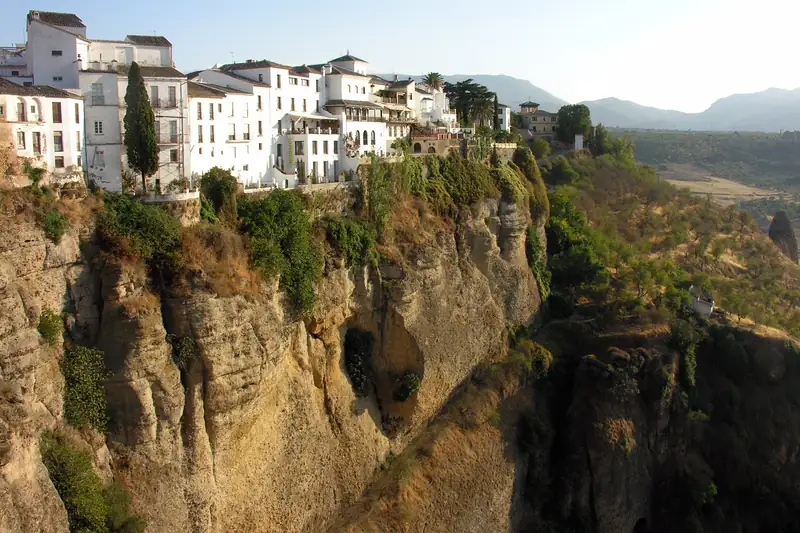
Ronda's main sight is the Puente Nuevo, the 18th-century bridge over the El Tajo gorge, which you can see from above, from inside and from below.
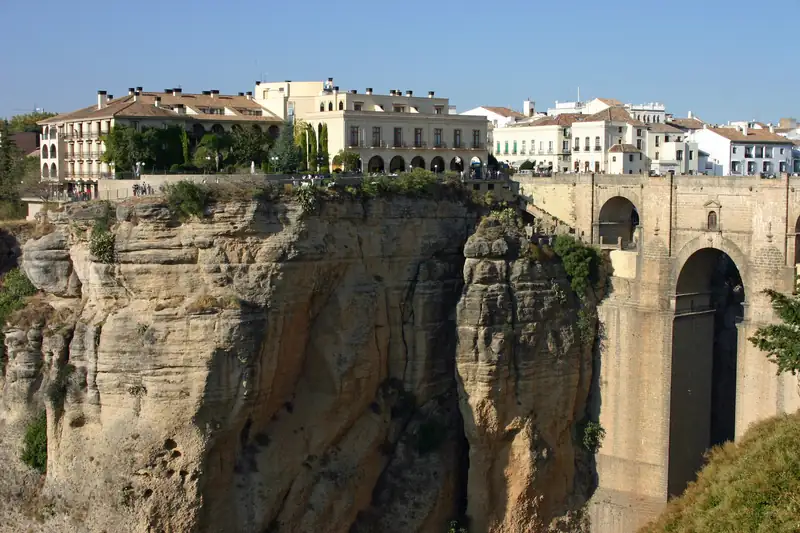
Stay in El Mercadillo, within five minutes of the Puente Nuevo, if it is your first visit or you have no car.
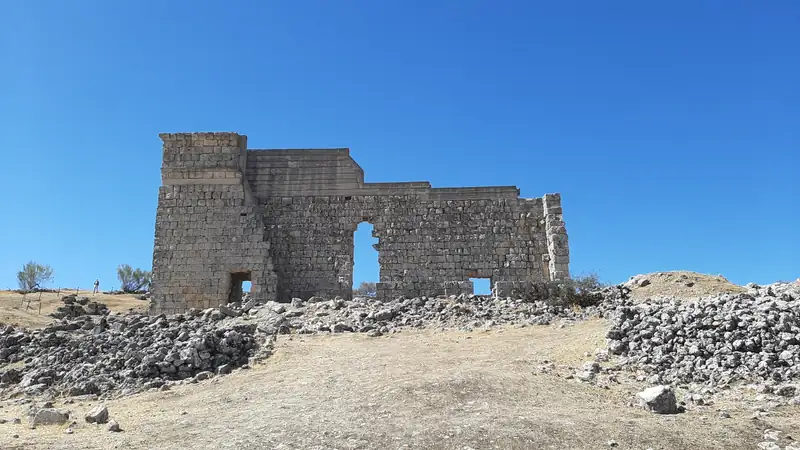
Acinipo, the ruins of a Roman town also called Ronda la Vieja, used to be free to visit but has been closed since storms in March 2025 brought down part of its access road.